
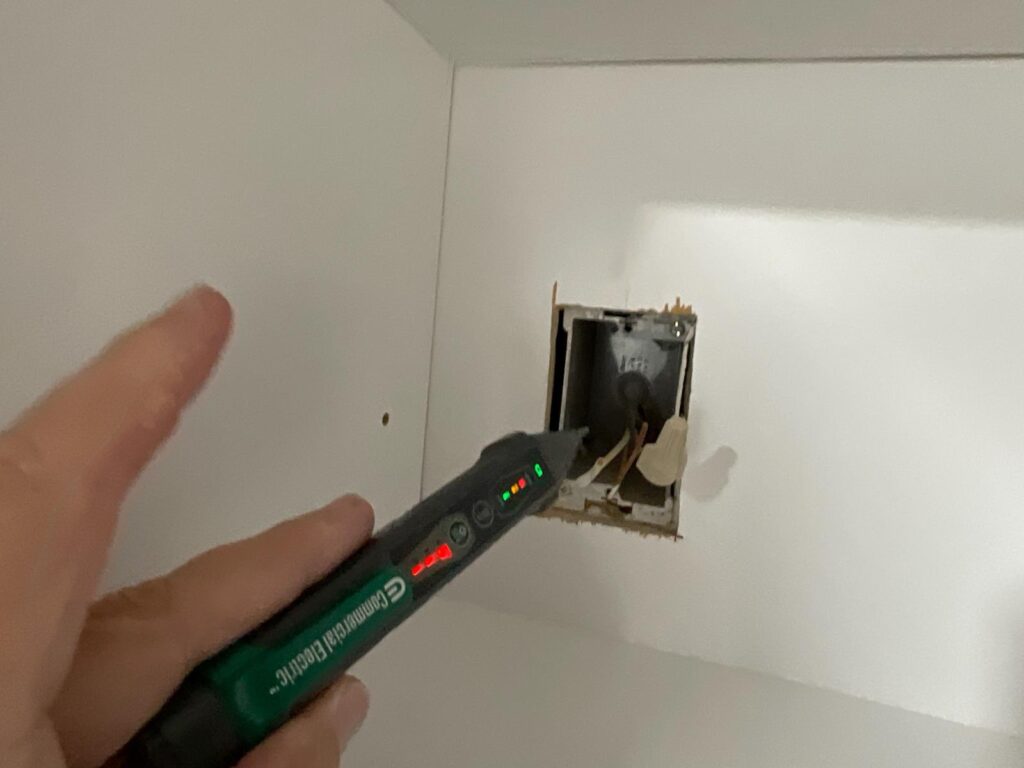
When I’m performing a home inspection, there are certain tools I rely on almost every day. One of the simplest but most useful is a non-contact voltage tester. You may also hear it called an “electric sniffer,” and the nickname fits: it “sniffs out” electrical voltage without having to touch bare conductors.
This small device can help reveal hidden hazards quickly, especially in areas where wiring is exposed, altered, or DIY’d over the years. In one inspection, my tester alerted me that a set of wires were live (energized) and they were not properly enclosed in a junction box. That combination can create a real safety risk for homeowners, families, and anyone working around that area.
What Is a Non-Contact Voltage Tester?
A non-contact voltage tester is a handheld electrical safety tool designed to detect the presence of electrical voltage near a wire, receptacle, cord, or device without needing to make direct metal-to-metal contact. Most units provide a light, beep, or vibration when voltage is detected.
It’s important to understand what it does (and doesn’t) do:
- It can indicate the presence of voltage: Great for identifying whether something may be energized.
- It does not measure how much voltage is present: It’s not a meter; it won’t tell you 120V vs. 240V.
- It does not confirm a circuit is safe to touch: Even if a tester does not alert, you should still assume wiring could be energized until properly tested and confirmed.
During an inspection, it’s a fast screening tool especially helpful when I’m looking at open wiring in basements, attics, crawlspaces, garages, utility rooms, or behind access panels.
Why I Use It During Inspections
Homes are often a patchwork of changes over time finished basements, added lights, replaced fixtures, modified outlets, new appliances, old knob-and-tube remnants, or DIY repairs that were never fully corrected. Electrical issues aren’t always obvious at a glance.
A voltage tester helps me:
- Identify potentially energized wiring in areas where it shouldn’t be exposed
- Flag unsafe conditions that require evaluation by a licensed electrician
- Reduce risk during inspection by avoiding contact with live components
- Support better homeowner awareness so you understand what’s going on in your home
What My Tester Found: Live Wires Not Properly Enclosed
In the situation that prompted this post, my non-contact tester indicated the wires were live. The concern wasn’t only that they were energized it was also that they were not properly enclosed in a junction box.
That matters because electrical connections and splices are meant to be contained inside approved electrical boxes (junction boxes) with appropriate covers. Those boxes serve a protective purpose: they shield people from accidental contact, protect the wiring from damage, and help contain sparks or heat if something fails.
Why Exposed Live Wiring Is a Safety Hazard
1) Increased Shock and Electrocution Risk
If live conductors are accessible whether in a basement ceiling, utility area, or behind stored items—someone can be shocked just by brushing against them. This risk increases in areas where people may carry long items (lumber, ladders, tools) or where kids might be present.
2) Increased Fire Risk from Loose Connections and Arcing
Many electrical fires start at connections: a loose splice, a wire nut that wasn’t installed correctly, corrosion, or movement over time. When a connection is not in a junction box, it is more vulnerable to physical disturbance and may overheat or arc.
Arcing can produce intense heat and can ignite nearby combustible materials such as:
- wood framing
- insulation (especially if faced paper is present)
- dust and debris
- stored cardboard boxes
3) Physical Damage Becomes Much More Likely
Junction boxes provide a durable enclosure. Without that protection, wiring can be nicked, crushed, snagged, or pulled apart. Even small damage to insulation can create a dangerous fault condition later.
4) Splices Must Be Accessible (and Protected)
Electrical splices should be accessible and protected in an approved box with a cover. Hidden splices or open splices outside a box make future repairs difficult and increase the likelihood that a problem goes unnoticed until it becomes serious.
What a Proper Junction Box Setup Typically Includes
While an electrician should make the final determination and perform repairs, a safe and typical setup generally involves:
- An approved electrical junction box sized appropriately for the number of conductors and devices
- A solid cover plate (blank cover if it’s just a splice)
- Proper cable clamps/connectors so cables entering the box are secured and protected from sharp edges
- Correct splicing methods using approved connectors (e.g., wire nuts) with proper conductor prep
- Proper support of cables to prevent strain on the connections
In many cases, the repair may be relatively straightforward installing a junction box, re-making the splices properly, securing the cables, and adding a cover. The key is that it must be done correctly and safely.
Common Places Homeowners Might Find Similar Issues
Homeowners often discover questionable wiring in places that are “out of sight, out of mind.” Some of the most common areas include:
- Basements (especially unfinished ceilings where wiring is exposed)
- Attics (older wiring, junctions buried under insulation, or DIY lighting)
- Garages (added outlets, open splices, extension-cord style wiring)
- Crawlspaces (moisture issues + wiring = added hazard)
- Behind appliances (ranges, dryers, water heaters, furnaces)
- Under kitchen/bath sinks (garbage disposal or dishwasher wiring alterations)
Homeowner Education: Warning Signs to Take Seriously
Even without specialized tools, there are warning signs that should prompt extra caution and professional evaluation:
- open splices or wire nuts hanging in the air
- wiring running through open holes without protection
- electrical tape used as a “fix” where a proper repair is needed
- burn marks, melted insulation, or a hot electrical smell
- frequent tripped breakers or blown fuses
- lights flickering when appliances turn on
If you notice any of these, it’s best to have the area assessed by a qualified licensed electrician.
Important Safety Notes About Non-Contact Testers
Non-contact voltage testers are handy, but homeowners should know their limitations:
- False positives can happen: Some testers detect “ghost voltage” or induced voltage near other energized conductors.
- False negatives can happen: Dead batteries, certain cable types, shielding, or tester sensitivity can affect results.
- Always test the tester: If you own one, test it on a known live source (like a working outlet) before and after checking a suspicious wire.
Most importantly: if you suspect wiring is live, treat it as live until it has been verified with proper testing procedures.
What I Recommend When This Condition Is Found
When my inspection reveals live wiring that is not properly enclosed in a junction box, I typically recommend:
- Evaluation by a qualified licensed electrician
- Repairs as needed to properly enclose all splices/connections in an approved junction box with a cover
- Further assessment to determine whether other areas of the home have similar conditions (especially if one DIY splice is found)
This isn’t about being alarmist it’s about recognizing that electrical safety issues can be high-consequence. Correcting them helps protect your home, your family, and your investment.
Bottom Line
That little “electric sniffer” can reveal big problems. In this case, it helped identify that wires were live and not properly enclosed an avoidable hazard that should be corrected.
If you’re buying a home, planning renovations, or simply want to understand what’s behind the walls and above the ceilings, a professional home inspection can help you spot concerns early and decide on the right next steps.
Have questions about an electrical condition you found in your home? Near Water Property Group, LLC is here to help you make informed decisions through the inspection process.
Buying or selling locally? A Nearwater home inspection puts these findings in context for Point Pleasant coastal homes and surrounding communities.