
Deal is a small borough, a little over a square mile, and almost entirely built out with single-family houses. What makes it unusual is how those houses are used. The Borough’s own master plan re-examination reports that roughly two thirds of the housing stock is large-capacity second homes.
That changes what matters in an inspection. A property occupied for part of the year has systems that spend months switched off, and the problems that develop while nobody is there are rarely the ones a walkthrough reveals.
CLIENT EXPERIENCES
Personal attention. Clear answers. Confidence in your next step.
We had a great experience with Tom. He was very responsive and arranged the inspection in such short notice. The inspection report was very detailed and easy to understand. Thank you, Tom!
Tom is a great inspector to work with. He has inspected several homes for my buyers in the past couple of months and he is detailed, knowledgeable, and most importantly, not an alarmist.
Read full reviewShow less+
He provides facts and gives sound advice so that all of us involved on the buy side are able to make informed decisions regarding the next steps. I highly recommend Tom for anyone looking for a fantastic home inspector.
Tom was phenomenal! Incredibly thorough, professional, and responsive, he inspected every detail of our new home with advanced tools like thermal imaging.
Read full reviewShow less+
His clear, detailed report and patient explanations gave us confidence to move forward. Tom’s honesty and expertise made the process stress-free. Highly recommend—best inspector out there!
A digital report arrives within 24 hours: annotated photos, plain-language summaries, and prioritized recommendations.
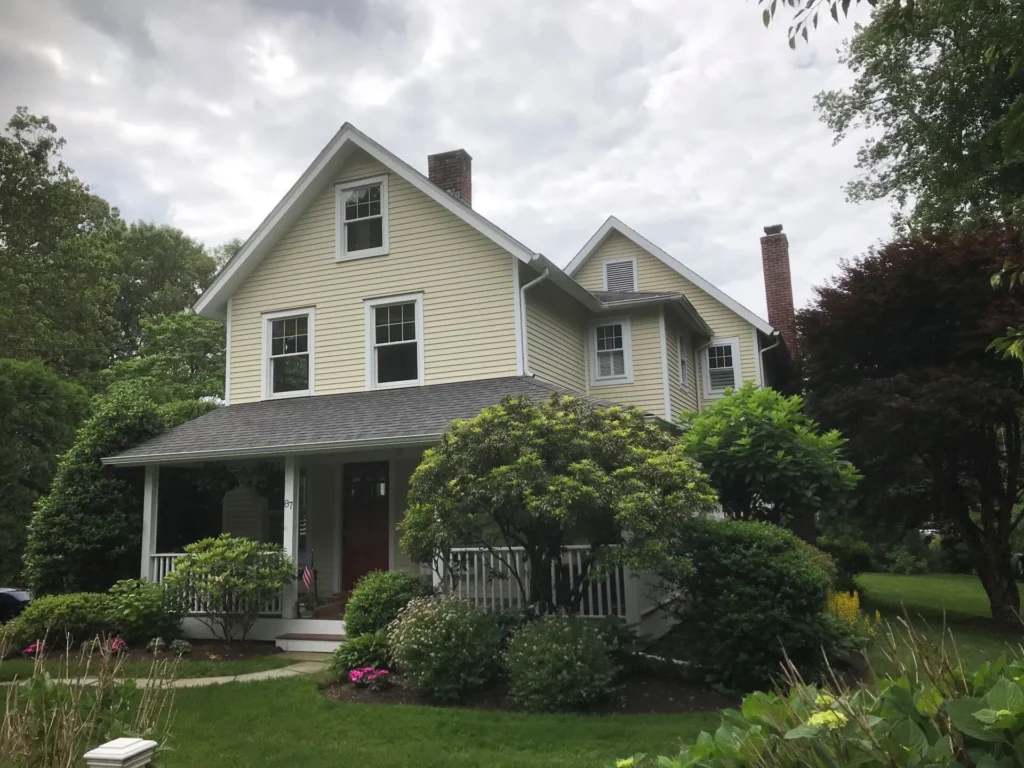
Deal’s housing stock spans several eras in a very small area. According to the Borough’s master plan re-examination, almost half of its houses were built before 1940, with further building peaks in the 1950s and 1970s. A street can hold a pre-war house, a mid-century house and a recent rebuild side by side, and each carries the wiring, plumbing and framing assumptions of its own decade.
Seasonal use adds a second layer. Water heaters and supply lines that sit idle develop sediment and corrosion that only shows up under sustained use. Traps dry out and let sewer gas through. Air conditioning that has not run since last summer can hold a failed capacitor or a blocked condensate line that nobody has had reason to notice. Closed-up houses hold humidity, and humidity in an unventilated space is how you get surface mould on finishes that were spotless in September.
I run systems long enough to see how they behave rather than long enough to confirm they switch on, because on a seasonal property those are very different tests.
Winterisation is worth asking about directly. Whether a house was drained properly, whether outside lines were isolated, and whether the heat was genuinely left on through a cold snap all determine what you are inheriting. A pipe that froze and split is sometimes found by the inspection, and sometimes found by the first tenant.
Because most new houses in Deal replace an older one, new construction turns up next to century-old neighbours. Newly built houses carry their own list: incomplete commissioning on multi-zone heating and cooling, grading and drainage on a freshly landscaped lot that has not yet seen a heavy storm, and finish work completed after the final trade inspections. New does not mean nothing to find, it means a different list.
Deal inspections usually run three to six hours. Large houses take longer, and a seasonal property takes longer again, because systems that have been shut down need to run for a while before they show their real condition.
Yes, and they need different attention. A pre-war house and a recent rebuild fail in different ways, so the inspection follows the construction era of each part of the building rather than applying one checklist.
It is worth testing. Radon comes up out of the soil, so the age and the style of the house matter far less than what is underneath it and how the lowest level is sealed and ventilated.
Please do. On a seasonal property especially, it helps to be there when systems are brought up, because seeing how something behaves after it has been running for a while explains more than a paragraph in a report.
Yes. Proximity to the ocean drives corrosion on exterior metal, condensing units, railings and fasteners, and it is one of the places where a house that has been closed up for months shows its age fastest.
Ask how long the house has been standing empty, whether it was winterised and by whom, whether the heating and cooling have been serviced since last season, and what work has been done without permits. Call 732-800-2318 and I will talk you through what to check before you commit.
Choose a buyer home inspection or a pre-listing inspection before selling. Ask about radon and mold testing and drone roof inspections when scheduling.


Thanks for stopping by! Where here to help, Please don’t hesitate to reach out