Sump pumps are one of those home components that most homeowners don’t think about until there’s a heavy rain, snowmelt, or a high groundwater event. When they’re installed and discharged properly, sump pumps can be a major help in keeping basements and crawlspaces drier and reducing the risk of water damage.
However, one issue that comes up during inspections more often than people realize is this: the sump pump is draining into the town’s sanitary sewer. This can overwhelm the wastewater treatment system during storms, it violates most municipalities’ ordinances, and it can put the homeowner at risk for significant fines and required corrective work.
That’s why this condition is something inspectors typically flag for correction.
What a Sump Pump Is (and What It’s Supposed to Do)
A sump pump is designed to collect and remove groundwater that accumulates around a foundation. Water enters a sump pit (basin) through a drain system or through the surrounding soil, and when the water rises to a certain level the pump turns on and discharges the water away from the home.
The goal is to manage groundwater and reduce the likelihood of:
- basement flooding
- foundation moisture intrusion
- mold-friendly damp conditions
- damage to stored items, finishes, and mechanical systems
But where the pump discharges the water is just as important as having the pump itself.
Sanitary Sewer vs. Stormwater: What’s the Difference?
Many homeowners assume that “a drain is a drain,” but municipal systems are typically designed for specific types of water:
Sanitary sewer: carries wastewater from toilets, sinks, tubs, showers, washing machines, and dishwashers to a treatment plant.
Storm sewer (or stormwater system): carries rainwater runoff from streets, gutters, and storm drains often discharging to a waterway after basic handling (depending on the town).
A sump pump is handling groundwater and storm-related water, not household wastewater. Sending sump pump discharge into the sanitary sewer is where problems begin.
Why Discharging a Sump Pump into the Sanitary Sewer Is a Big Problem
1.) It Can Overwhelm the Treatment Plant During Storms
During heavy rain events, many sump pumps in a neighborhood may run at the same time. If even a portion of them discharge into the sanitary sewer, it can create a surge of water that the system was never designed to treat.
This extra volume can:
- reduce treatment efficiency
- increase the risk of backups in homes
- contribute to overflows and environmental issues
- drive up municipal operating costs (which can ultimately impact residents)
2.) It Often Violates Local Ordinances
Most towns have rules against connecting sump pumps (and sometimes downspouts) to the sanitary sewer. Some municipalities actively inspect and enforce this especially if they’re dealing with chronic inflow/infiltration problems or treatment plant overload events.
Even if “it’s been that way for years,” it can still be a violation.
3.) It Can Lead to Heavy Fines and Mandatory Repairs
Municipalities may issue notices of violation requiring disconnection, and homeowners can be subject to penalties. In some cases, the town may require:
- proof of correction
- permitted plumbing work
- follow-up inspections
For buyers, this is also important because it can become a surprise expense shortly after moving in.
4.) It Can Increase the Risk of Sewer Backup into the Home
When the sanitary sewer system is overloaded during storms, the pressure in the line can rise. Depending on the home’s plumbing configuration, that can contribute to sewage backups one of the messiest and most expensive types of water damage to clean up properly.
While a sump pump connection isn’t the only factor that can lead to a backup, it’s part of an overall pattern of “stormwater where it doesn’t belong.”
How Inspectors Identify This Issue
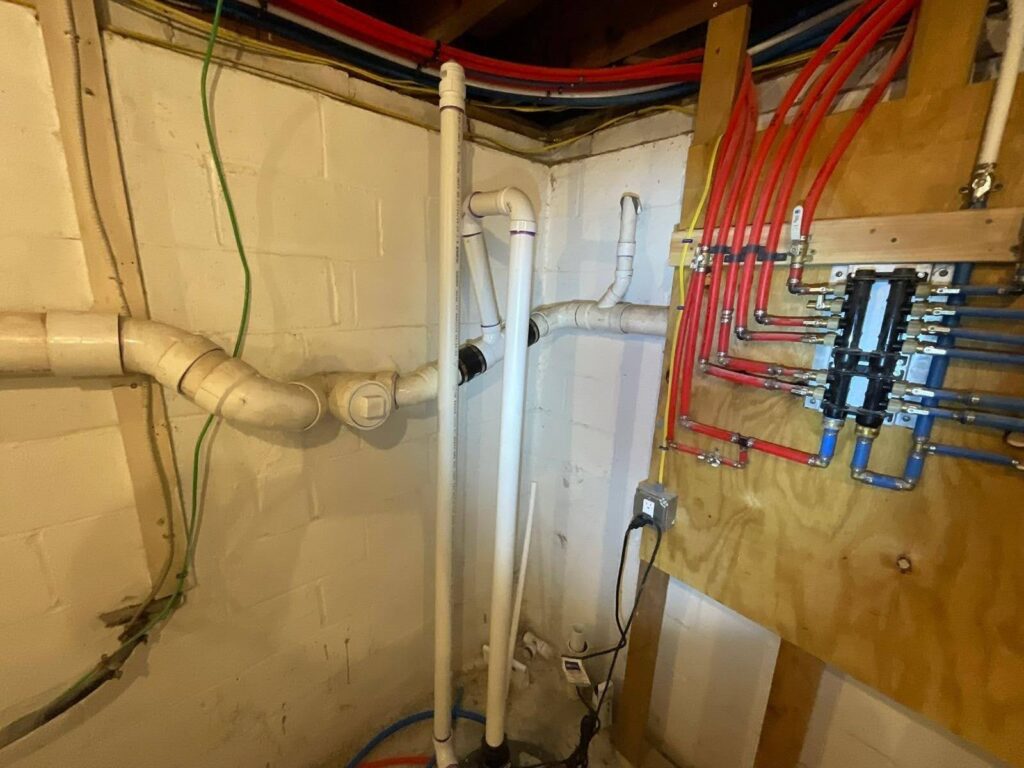
During an inspection, we’re often looking at the sump pump discharge piping route and where it terminates. Red flags include:
- the discharge pipe disappears into a floor drain
- the discharge appears connected to a sewer cleanout
- there’s no visible exterior discharge termination
- the pipe runs toward the main building drain line rather than out of the structure
Sometimes dye testing or further evaluation is needed to confirm the exact destination of the discharge. But if it appears connected to the sanitary system, it’s typically reported as a concern and recommended for correction by a qualified professional.
Where Should a Sump Pump Discharge Instead?
Proper discharge options depend on local requirements and the property layout, but commonly acceptable approaches include:
- Discharging to the exterior away from the foundation (often the most common)
- Discharging to a stormwater system (only if permitted by the municipality)
- Discharging to a dry well or approved onsite drainage system (where allowed and properly designed)
A key principle is that the discharge should move water away from the home so it doesn’t just recirculate back toward the foundation.
General Best Practices for Homeowners
Make sure the discharge terminates several feet away from the foundation (distance varies by site conditions and local guidance).
- Avoid discharging where it will create ice hazards on walkways in winter.
- Avoid discharging directly onto a neighbor’s property.
- Confirm the piping is protected from freezing and blockage.
Because municipalities differ, the safest step is to verify local rules or work with a licensed plumber who is familiar with the town’s requirements.
Why This Comes Up in Older Homes (and DIY Setups)
Some older homes were configured at a time when regulations and enforcement were different, or the work was done as an informal “easy fix.” Homeowners sometimes route sump discharge into a floor drain because it seems convenient and keeps water “out of sight.”
Unfortunately, that convenience can come with real consequences especially during heavy weather events when the system is under stress.
What to Do If You Think Yours Is Connected to the Sanitary Sewer
If you suspect your sump pump discharges into a floor drain or sanitary piping:
Don’t ignore it: this is one of those issues that can turn into a compliance or fine problem later.
Consider having a licensed plumber evaluate it: they can confirm the connection and propose a compliant discharge route.
Check local guidance: some towns publish sump pump and downspout disconnection requirements.
If you’re in the middle of a real estate transaction, it’s also reasonable to request that the issue be corrected by a qualified contractor especially if it’s a known ordinance violation.
Takeaway: Flag It
A sump pump that drains to the sanitary sewer is a problem for the municipality and a liability for the homeowner. It can contribute to overwhelmed treatment plants during storms, violates most towns’ ordinances, and may lead to heavy fines and required repairs.
If you’re buying a home or maintaining one this is a good item to verify. Catching it early can save money, headaches, and potential water damage down the road.
Buying or selling locally? A Nearwater home inspection puts these findings in context for Point Pleasant coastal homes and surrounding communities.