The NJ home inspection fire extinguisher rule that everyone still repeats is gone. If you are selling a house in Monmouth County and somebody told you to go buy an extinguisher before the town comes out, that advice is out of date. New Jersey repealed the requirement for the resale certificate on February 3, 2025 under P.L.2025 c.19, and the town inspector is not going to ask for one anymore.
I still hear it every few weeks, usually from a seller in Point Pleasant Boro or Brielle who got a checklist that has not been revised since 2024. So let me lay out what the state actually still requires, and where I see people lose a closing date over it.
The two inspections people keep confusing
This is the root of most of the confusion, and it is worth separating before anything else.
The first is my inspection. A buyer hires me to look at the whole house: roof, structure, electrical, plumbing, heating, cooling, and everything in between. I write a report. Nobody passes or fails, and I do not issue a certificate.
The second is the municipal resale inspection, done by your local fire official under N.J.A.C. 5:70-2.3. That one is narrow, it is a pass or fail, and you cannot close without the certificate. It looks at smoke alarms, carbon monoxide alarms, and until last year, a portable fire extinguisher.
Those are different people on different days for different reasons. When a seller tells me they already had their inspection, I usually have to ask which one.
NJ home inspection fire extinguisher rules after the 2025 repeal
The extinguisher line is gone from the resale certificate. Before February 2025 you needed a listed, tagged extinguisher of the right size, mounted within ten feet of the kitchen, no more than five feet off the floor, with the manual still attached. That whole section was struck when the Uniform Fire Safety Act was amended.
Nothing in the repeal says an extinguisher is a bad idea. I still think a kitchen should have one. But you no longer have to run out and buy a specific unit to satisfy a town official, and if a listing agent hands you a checklist demanding one, that checklist is old.
If you have an old extinguisher sitting in a cabinet, it does not go in the trash. Monmouth County runs household hazardous waste drop-off days, and that is where a spent or expired unit belongs.
What the certificate still turns on
Here is where sellers actually get held up, and both items are cheaper to handle in advance than in the week before closing.
Smoke alarms must be less than ten years old, on every level of the house including a finished basement or attic, and within ten feet of every sleeping area. Since January 1, 2019, a house running on standalone battery alarms has to use ten year sealed battery units. A regular nine volt alarm you can pop open will fail, no matter how new it is.
If the house was built or retrofitted with hardwired interconnected alarms, that system has to stay as installed. You cannot swap in wireless battery interconnected alarms as a substitute, and alarms tied into a burglar alarm panel do not count on their own.
Carbon monoxide alarms have to be within ten feet of every sleeping area, and they are on a shorter clock than smoke alarms: under seven years old, or whatever the manufacturer prints on the back. Combination smoke and CO units go by the ten year figure.
The date is on the back, and nobody looks
This is the single most useful thing in this post, so I will be plain about it.
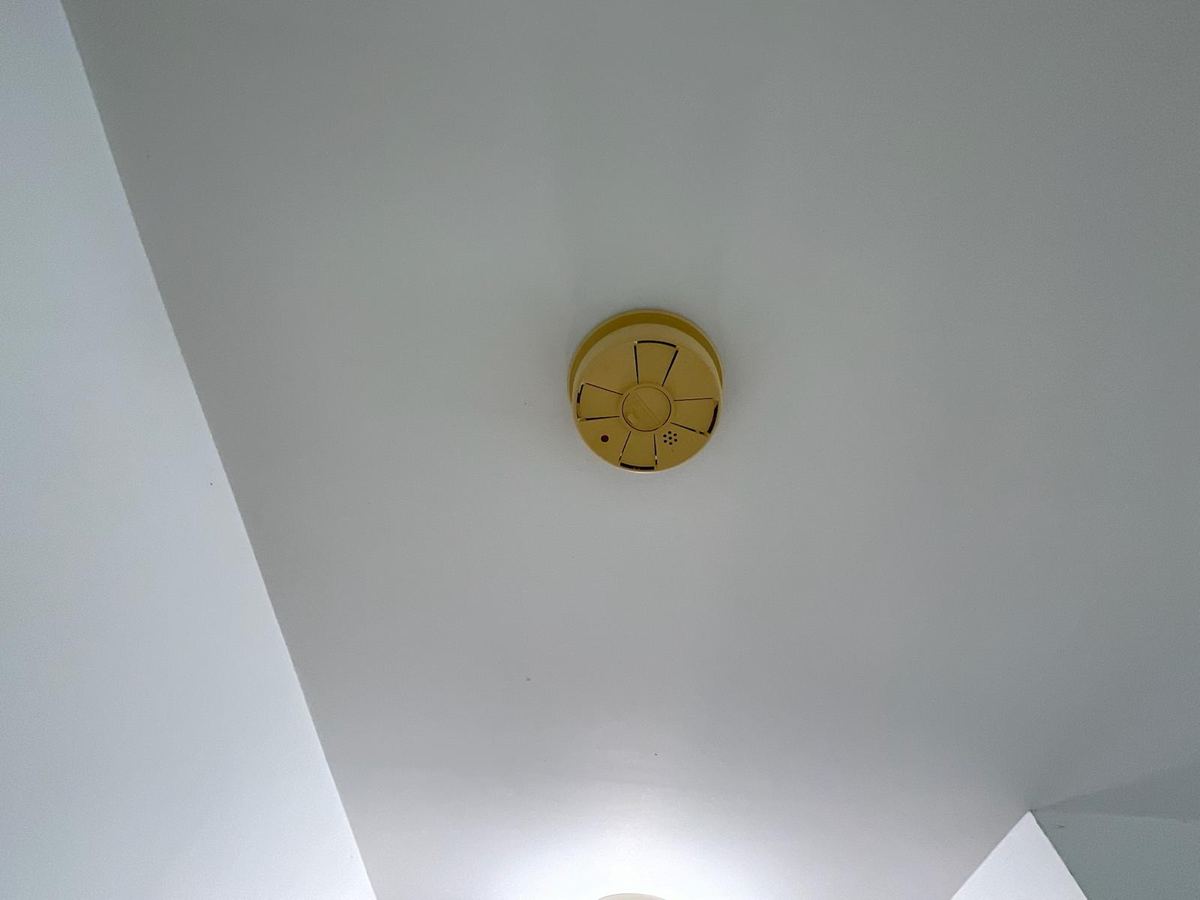
Every smoke and CO alarm has a manufacture date printed on the back of the housing, on the side that faces the ceiling. Not the battery date. Not the date you bought it. The date it came off the line. I take alarms off the bracket during an inspection and read that stamp, and I find ten and twelve year old units in houses where the seller swears they are new, because somebody replaced the battery in 2022 and mentally filed it as handled.
The yellowing is your free shortcut. That housing starts life bright white and goes cream, then amber, from UV and off-gassing over the years. If it has visible color to it from the floor, it is old. Twist it off and read the stamp anyway, but you already know.
Do that walk yourself this weekend. It costs nothing and it removes the most common reason a resale inspection fails.
Where I look for a carbon monoxide problem
The alarm requirement exists for a reason, and the reason usually lives in the basement.
On a high efficiency furnace, the exhaust runs out through PVC rather than a metal flue. When that pipe is sized too wide for the appliance, the exhaust gas cools before it gets outside and condenses inside the pipe. What you see at the joint is a white and yellow powdery crust building up around the collar.
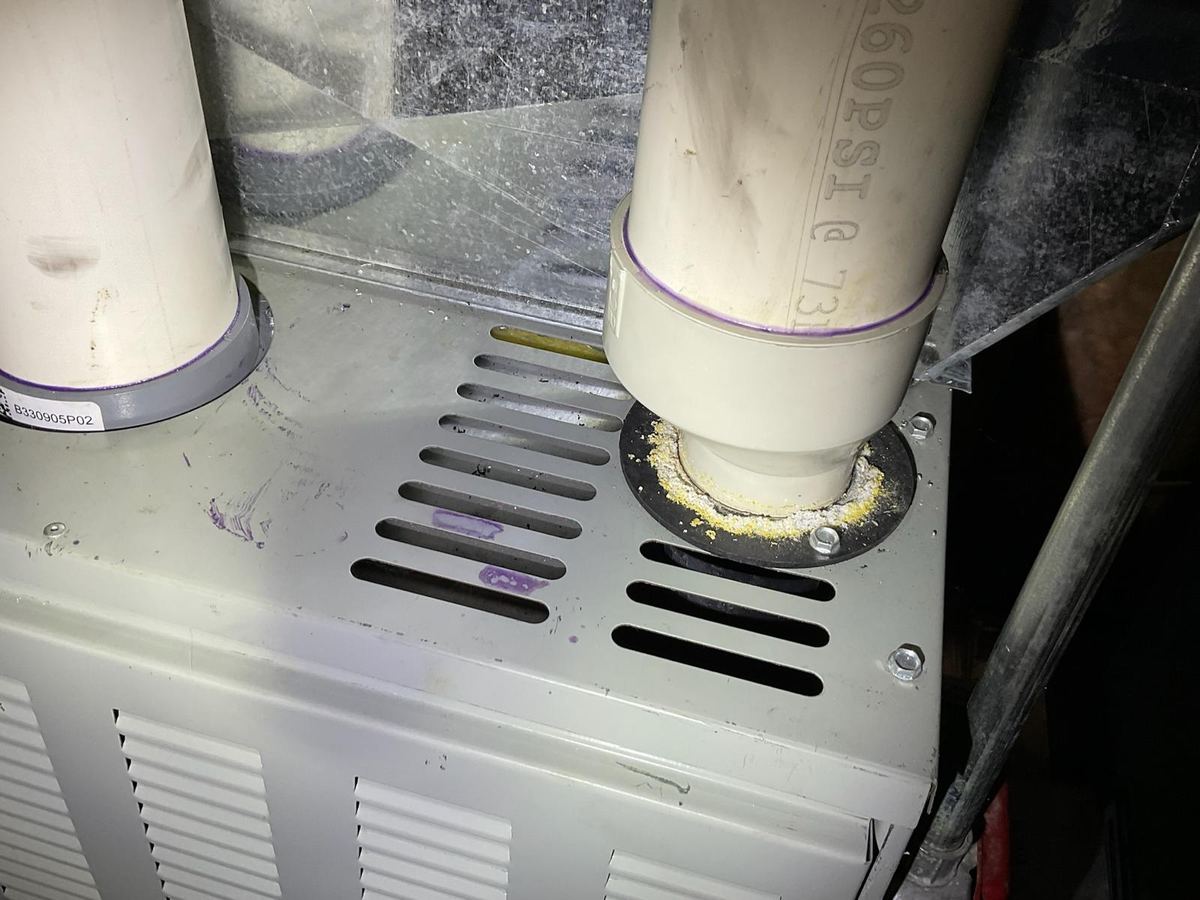
That is not cosmetic. It tells me combustion products are not clearing the way they should, and it is exactly the condition a CO alarm exists to catch downstream. I flag it, and I want the heating contractor to look at the vent sizing rather than someone scrubbing the collar clean before the next showing.
A CO alarm is the last line, not the first. The venting is the first.
Common questions
Do I still need a fire extinguisher to sell my house in New Jersey? No. The requirement was repealed effective February 3, 2025. Your town cannot withhold the certificate over it.
Are NJ home inspection laws and the resale fire inspection the same thing? No. Home inspectors in New Jersey are licensed and work to a standards of practice, but that is a private report for the buyer. The resale certificate is a separate municipal inspection under the fire code.
How old can my smoke alarms be? Under ten years, measured from the manufacture date stamped on the back of the unit, not from when you bought it.
Who schedules the resale inspection? The seller, through the local fire official or fire prevention bureau. Most towns want a few weeks of notice, so start it as soon as you are under contract rather than the week of closing.
Getting ahead of it
If you are listing a house on the shore, the smoke and CO walk is the easiest thing on your whole to-do list and the one most likely to bite you late. Read the dates, count the levels, and replace anything questionable before an inspector is standing in your hallway.
If you want a clear picture of the whole house before you list, that is what a pre-listing inspection is for: you find out what a buyer’s inspector is going to find, while you still have time to decide what to do about it. Radon and mold work sits under home testing services if the property calls for it. I cover Point Pleasant Boro, Wall Township, Manasquan, Brielle, Spring Lake, Red Bank and the rest of Monmouth County, and reports go out digitally within 24 hours.
Call Nearwater Property Group at 732-800-2318 to get on the schedule, and I will tell you straight what I find. No drama.
*Nearwater Property Group is NRPP certified for radon testing and provides buyer inspections, pre-listing inspections, mold testing, thermal imaging and drone services across Monmouth County, New Jersey.*