Most of the home inspection checklists you will find are lists of things the inspector looks at. That is my job, and you are paying me to do it, so I am not sure why you would need to memorize it.
The checklist that actually helps a buyer in New Jersey is a different one. You have signed a contract, attorney review has started, and you have a short window to find out what you are buying and decide what to ask for. What you need is a list of decisions, in the order they come at you. That is what this is.
The home inspection checklist NJ buyers should work from
Attorney review is three business days unless somebody extends it, and your inspection contingency usually runs a week or two past that. It sounds like plenty. It is not, because the things that take the longest to schedule are the ones you decide on last.
Here is the order that keeps people out of trouble in Monmouth County.
Book the inspection first, before you decide on anything else. Everything else depends on what the house is. A 1962 ranch in Wall Township and a 2019 build in Brielle need different add-ons, and you do not know which until somebody has been through it.
Tell me the age of the house and whether it is on sewer or septic when you call. Those two facts decide half the list below, and I would rather sort it out on the phone than have you find out mid inspection that you need a specialist you did not book.
Decide on radon before inspection day, not after. A radon test sits in the house for at least 48 hours under closed house conditions. That means windows shut, and it means somebody has to let the device be placed and then collected. If you order it as an afterthought on day eight of a ten day contingency, you are asking a seller for an extension for something you could have handled on day one. New Jersey has real radon geology and Monmouth County is not exempt from it, so this is not a box to tick lightly.
Decide on a sewer scope if the house is older or has mature trees between it and the street. I do not run a camera as part of a standard inspection and I will tell you when I think you need one. A licensed plumber does that, and their schedule is their own.
If there is any chance of an underground oil tank, deal with it now. Older shore houses converted from oil, and a tank sweep is a separate specialist with separate equipment. This is the single item on the list that most often turns into a negotiation nobody planned for, because a buried tank is not a repair, it is a remediation.
Be there for the last hour, not the first. More on that below.
Read the report the day you get it. Mine is digital and you have it within 24 hours. Your window to raise anything runs on a calendar, not on when you got around to opening the PDF.
What is a decision and what is just an upsell
I get asked this constantly, and the honest answer is that it depends on the house rather than on the buyer.
Radon testing is a decision for almost every buyer here, because you cannot see, smell or reason your way to the answer. Mold testing is a decision when there is a visible reason to ask the question: a musty finished basement, a past leak, staining somebody painted over. It is not something I would recommend on a dry house with nothing to look at.
Termite and wood destroying insect inspection is often required by the lender anyway, so ask your mortgage officer before you pay for it twice.
Well and septic evaluations are their own disciplines with their own testing. If you are buying in the western part of the county, book those early and book them separately.
Thermal imaging is worth it more often than people think, because it finds moisture behind a surface that looks fine. It is also not magic, and anybody selling it as an x-ray is overselling it.
What I will not do is add a service to a job because the invoice looks thin. Inspections without the drama cuts both ways: I am not going to inflate a minor issue in the report, and I am not going to sell you a test the house does not call for.
Walk the house yourself first, before I get there
If you can get in once more before inspection day, spend twenty minutes looking at the outside. You are not doing my job. You are building the list of questions you want answered while I am standing there, which is the most valuable hour of the whole process.
Walk the perimeter and look at where water goes.
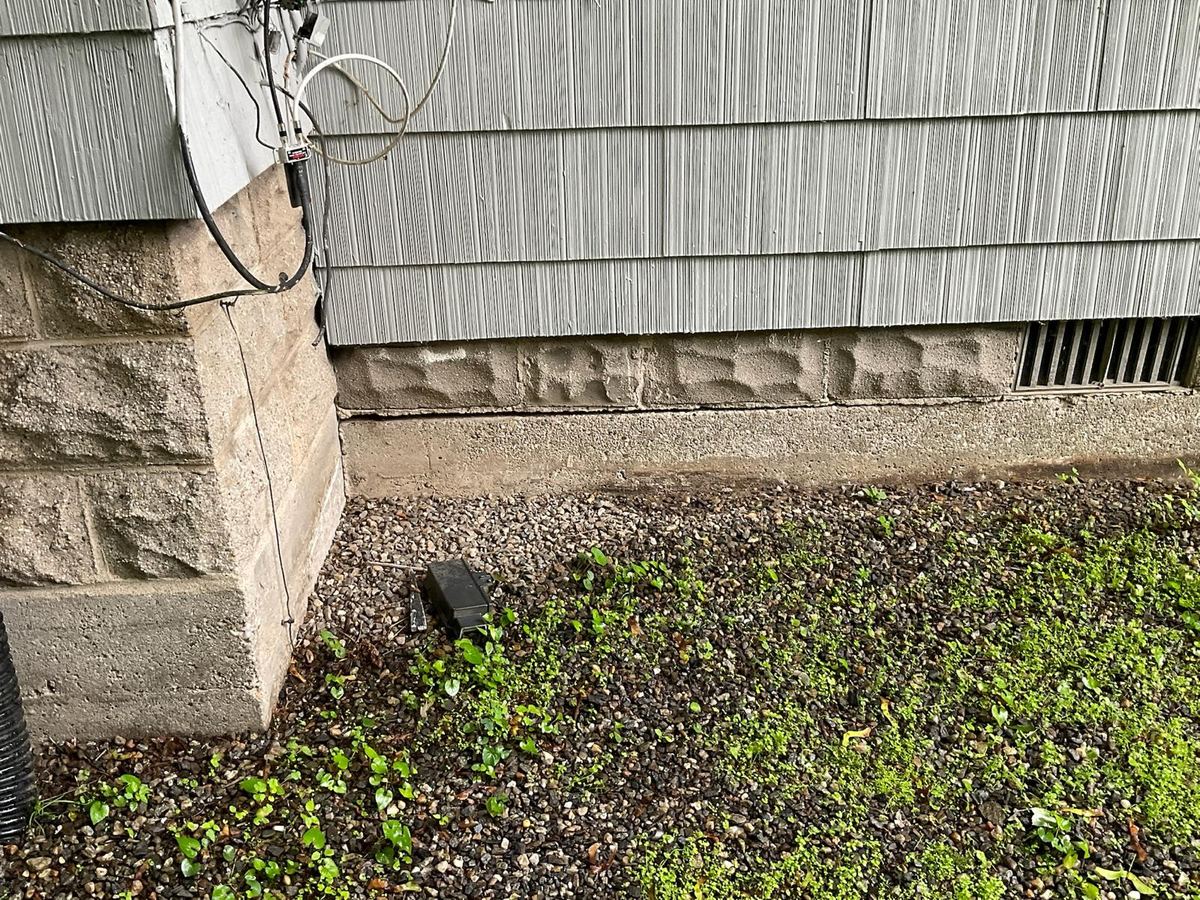
A separation like that is visible from the lawn if you are looking, and it is the difference between a cosmetic conversation and a structural one. You do not need to know which it is. You need to point at it and ask.
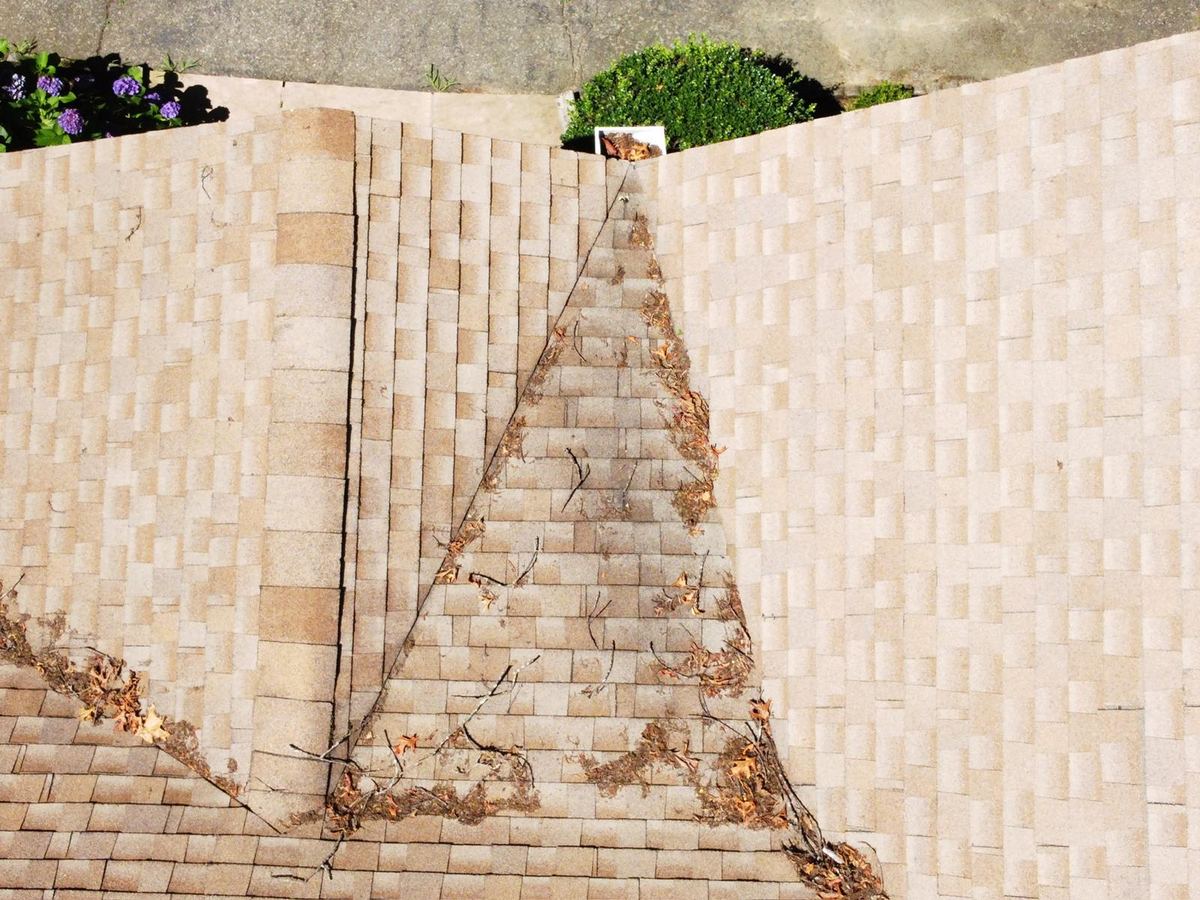
Look up at the roof from a few angles too, especially where two roof planes meet.
Then look at the downspouts. Count them, and follow each one to where it ends. A downspout that stops short, or is missing entirely, sends every storm straight down the wall and back against the foundation. It is a cheap fix and an expensive thing to ignore, and it is the most common exterior defect I write up around here.
Inside, open and close a few windows, run the shower in the primary bath, and look under the sinks with the cabinet doors all the way open.
One more thing, and it is the item buyers are most surprised by. If I cannot get to something, I cannot inspect it, and I report that as a limitation rather than as a pass. Furniture in front of an electrical panel, stored boxes filling a crawlspace hatch, a heavy piece on a windowsill I am not comfortable moving. If you can ask the seller to clear access before the day, you get a more complete report for the same money.
Common questions
Is a home inspection mandatory in NJ? No. Nothing requires it. Your contract gives you an inspection contingency and it is yours to use or waive. Waiving it removes your leverage to renegotiate or walk, which is a real decision and not a formality.
Do banks do home inspections? No. A lender orders an appraisal, which values the property for the loan. An appraiser is not evaluating the condition of the roof or the age of the heater. Those are different jobs with different purposes, and buyers conflate them all the time.
Does NJ require radon testing when you buy a home? Not for a standard residential sale. It is your call as a buyer, and it is a call worth making before the device needs to sit in the house for two days.
Do home inspectors come inside? Yes, throughout. A standard inspection covers the interior, the accessible structure and the systems, plus the exterior and the roof where I can safely observe it.
Should I be at the inspection the whole time? You do not need to be. The last hour is where the value is, because by then I know what I found and can walk you to it.
Getting yours on the calendar
If you are under contract in Point Pleasant, Wall Township, Manasquan, Brielle, Spring Lake or anywhere else in Monmouth County, the useful move is to call before you have worked out what you need. That conversation is how the add-on list gets decided correctly instead of hopefully.
Here is what a full home inspection covers, what is included in radon and mold testing, and the service areas list if you want to check your town.
Call me at 732-800-2318 with the address, the year the house was built, and your attorney review end date. I will tell you what to line up and in what order, and you will have the report within 24 hours of the walkthrough.