
The electrical issues in a home inspection are the ones that make buyers most nervous, and not always for the right reasons. Some of what I write up is a genuine safety item that should be corrected before anyone moves in. Some of it is a fifteen dollar part. The problem is that they look identical in a report, sitting one after another in the same list with the same formatting.
So here is how I actually think about the electrical section on a Point Pleasant Boro or Manasquan house, in the order I would want a buyer to worry about it.
The panel is where I spend the most time
I take the cover off. That is the part that separates an inspection from a walkthrough, and it is where the story of the house tends to be written.
What I am reading in there is workmanship. A panel wired by someone who does this for a living looks like it: conductors dressed and routed, one wire per terminal, breakers sized to the wire they protect. When I open a panel and find something else, I start wondering what else in the house got the same treatment, and I usually find out before the morning is over.
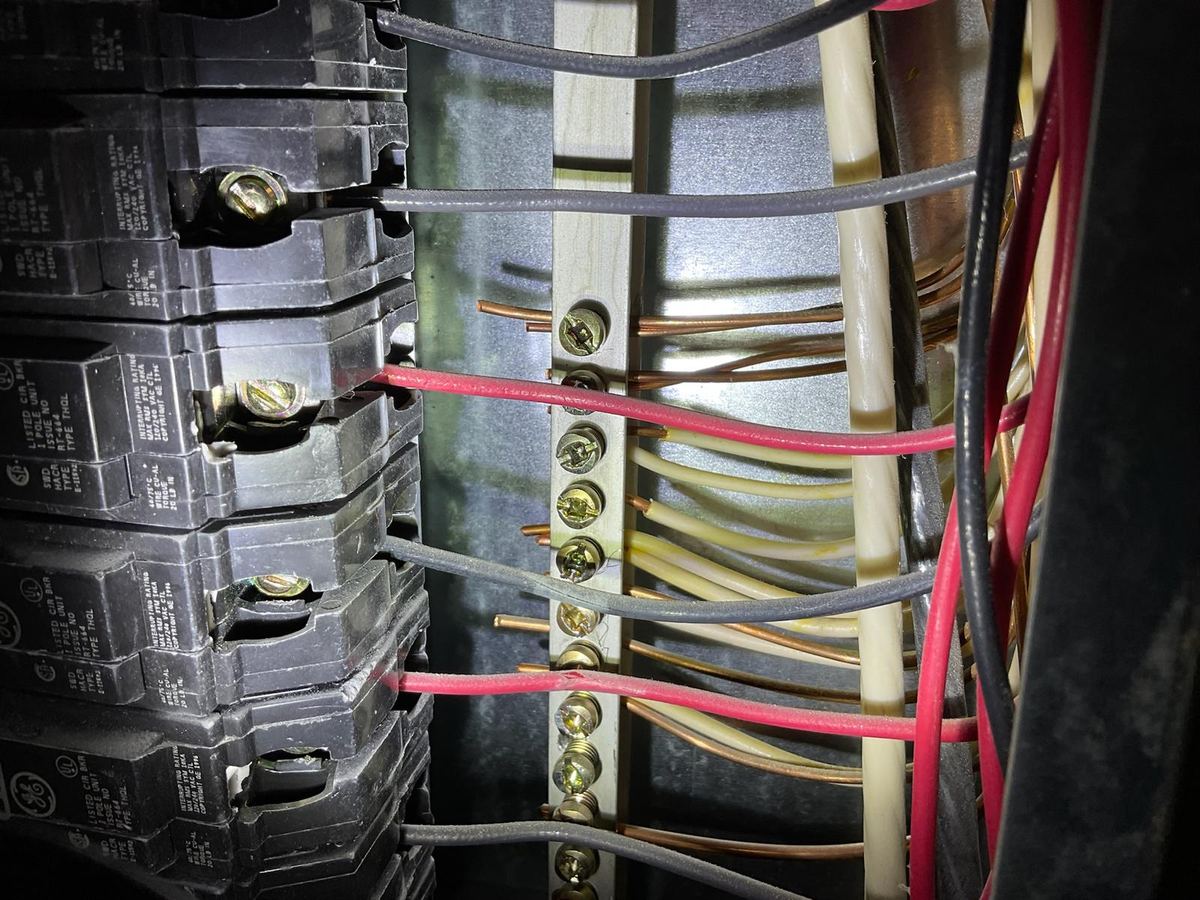
A double tap is the one I find most. Two conductors landed under a screw that is designed and listed for one. It matters because the screw cannot clamp both wires evenly, so one of them sits slightly loose, and a loose connection under load is how you get heat. It is also usually cheap to correct, which is worth saying out loud to a buyer who has just watched their inspector frown into a panel.
The finding that is not a finding
Sometimes the honest answer is that I could not look.
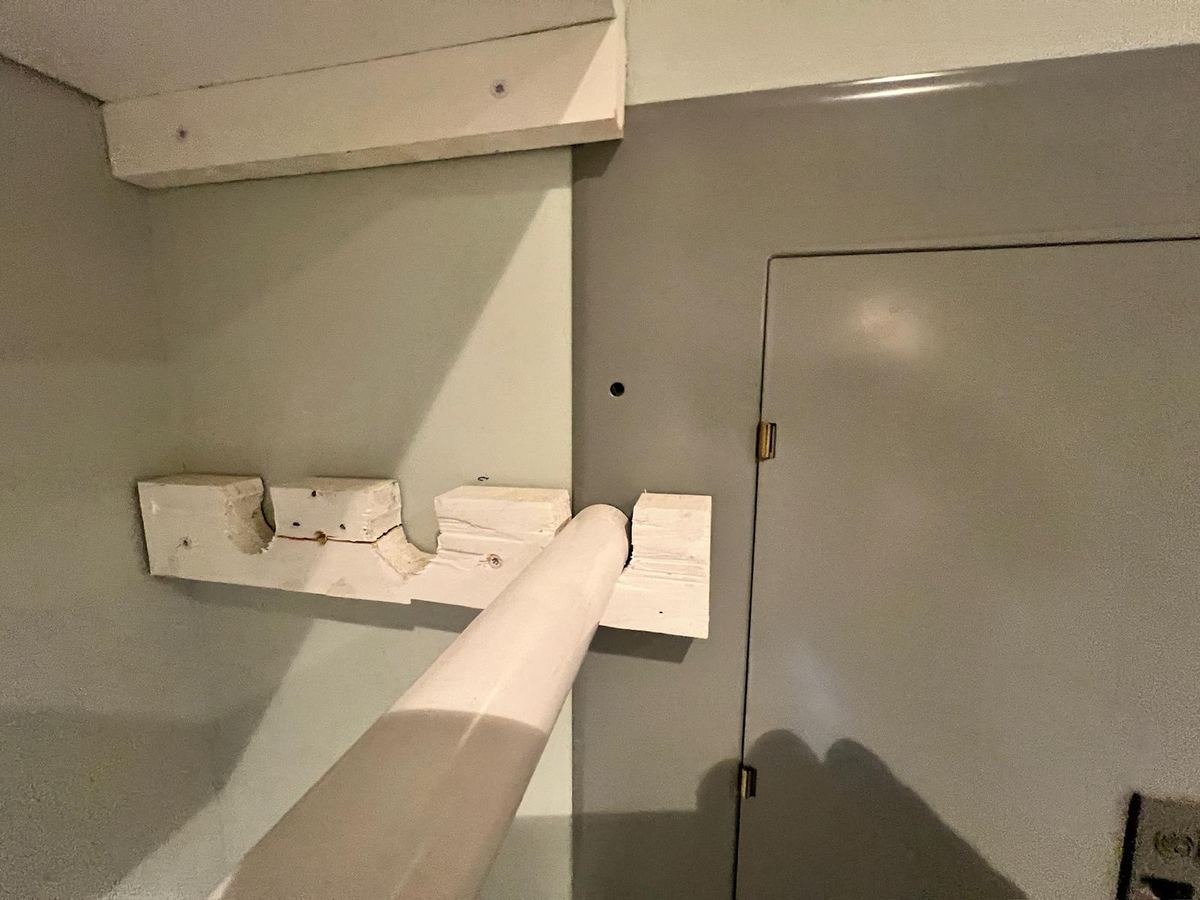
That goes in the report as a limitation, and a limitation is not the same thing as a pass. I would rather write down that I could not inspect something than imply I did. If you are reading a report and you see that word, it is worth asking whether it can be re-checked before your contingency period runs out, because an uninspected panel is a genuine unknown rather than a formality.
This is also the easiest thing in the world for a seller to prevent. Clear the panel, the attic hatch and the crawlspace entrance before the appointment and you convert three potential blanks into three real answers.
Receptacles tell you the age of the wiring
I test them, and what comes back says a lot about what is behind the walls.
A two prong receptacle means there is no equipment ground at that outlet. On the older shore housing stock that is common, and it is not automatically a crisis, but it does mean anything you plug in with a three prong cord is not grounded no matter what adapter you use on it.
Reversed polarity is the one that surprises people. Hot and neutral are swapped at the outlet. Most appliances will run happily and you would never notice. On a GFCI protected circuit it can defeat the protection, which is exactly where you do not want a surprise.
And GFCI protection missing entirely at a kitchen counter, a bathroom, an exterior wall or near a tub is one of the most common write ups I have. Near the water, with the humidity we live in, that one is not academic.
Electrical issues in a home inspection that sound worse than they are
An older panel is not automatically a defect. What matters is its condition, whether the breakers match the panel, and whether there is corrosion, which on this coast there sometimes is. I would rather tell you an electrical panel is near the end of its service life than write it up as a failure it has not had.
A few loose receptacles, a missing cover plate, a light fixture in a closet that is too close to the shelf: these are real items and they belong in the report, but they are an afternoon for an electrician, not a negotiation.
That is the whole job as I see it. Not a longer list. An accurate sense of which three things on the list should change your thinking, which is the same standard I apply to everything else I find in these houses.
Common questions
Can a home inspector open an electrical panel? Yes, and it is a normal part of a home inspection. If a panel is blocked, painted shut, or unsafe to open, that gets documented as a limitation instead.
Are double tapped breakers dangerous? They are a defect worth correcting rather than an emergency. The risk is a loose connection heating up over time. Some breakers are actually listed for two conductors, which is one of the reasons the finding needs an electrician to evaluate rather than a rule of thumb.
Do I need an electrician if the inspection finds electrical issues? For anything inside the panel or involving the wiring, yes. For a loose receptacle or a missing cover plate, that is a handyman item.
Does a home inspection include an electrical inspection? A home inspection covers the electrical system visually and by operation: the panel, a sample of receptacles and switches, visible wiring, and the service. It is not the same as a code compliance inspection by a licensed electrician.
Getting the electrical read properly on your house
If you are under contract in Point Pleasant Boro, Manasquan, Brielle, Sea Girt or anywhere in Monmouth County, the electrical section is worth being there for in person. I will take the cover off and show you what is behind it.
You can see what a buyer’s home inspection covers, what radon and mold testing adds when the property calls for it, and how inspections in Point Pleasant work. Call 732-800-2318 with your closing date and we will fit you inside your contingency window.
Knob-and-tube wiring in older homes
Porcelain knobs and tubes in an attic or basement may be remnants of an earlier electrical system. Their presence alone does not establish whether the wiring remains energized. An inspector documents accessible evidence, deteriorated insulation and questionable alterations; a licensed electrician can investigate active circuits and plan repairs. A newer panel does not prove every branch circuit has been replaced.
Before an inspection contingency expires, ask your insurer about its requirements for the actual wiring found and obtain an electrician’s assessment where recommended. For historic homes in Red Bank and vintage homes in Middletown, visible electrical details deserve attention alongside the structure and moisture conditions.
Buying or selling locally? A Nearwater home inspection puts these findings in context for Point Pleasant coastal homes and surrounding communities.