
Buyers ask me this before almost every job: can I be home during a home inspection, or am I supposed to stay out of the way? You are welcome to be there, and I would rather you were. But there is a right way to do it, and showing up at the front door at minute one with three relatives is not it.
Here is how a typical inspection on a Point Pleasant Boro or Manasquan house actually runs, and where you fit into it.
Being home during a home inspection: the first hour and a half is not for you
I start outside, on the roof or under a drone, then work the grade, siding, and foundation before I ever come in. Inside, I run the systems in a fixed order so nothing gets missed: water heater, panel, heat, air, then room by room with a moisture meter and a thermal camera on anything that reads odd.
None of that is interesting to watch, and stopping to explain each item as it comes up roughly doubles the time. If you arrive early you will spend an hour standing in a driveway. What I actually want is for you to arrive in the last hour, once I know what the house is and I can show you findings instead of process.
If you cannot be there at all, that is fine too. The report goes out digitally within 24 hours, and I will walk you through it by phone.
What to do with your hands when you get there
Bring your phone and nothing else. Leave the parents and the contractor uncle for a second visit, because a group turns a technical walkthrough into a debate and I lose the buyer in it.
Then ask me to physically put you in front of four things before I leave:
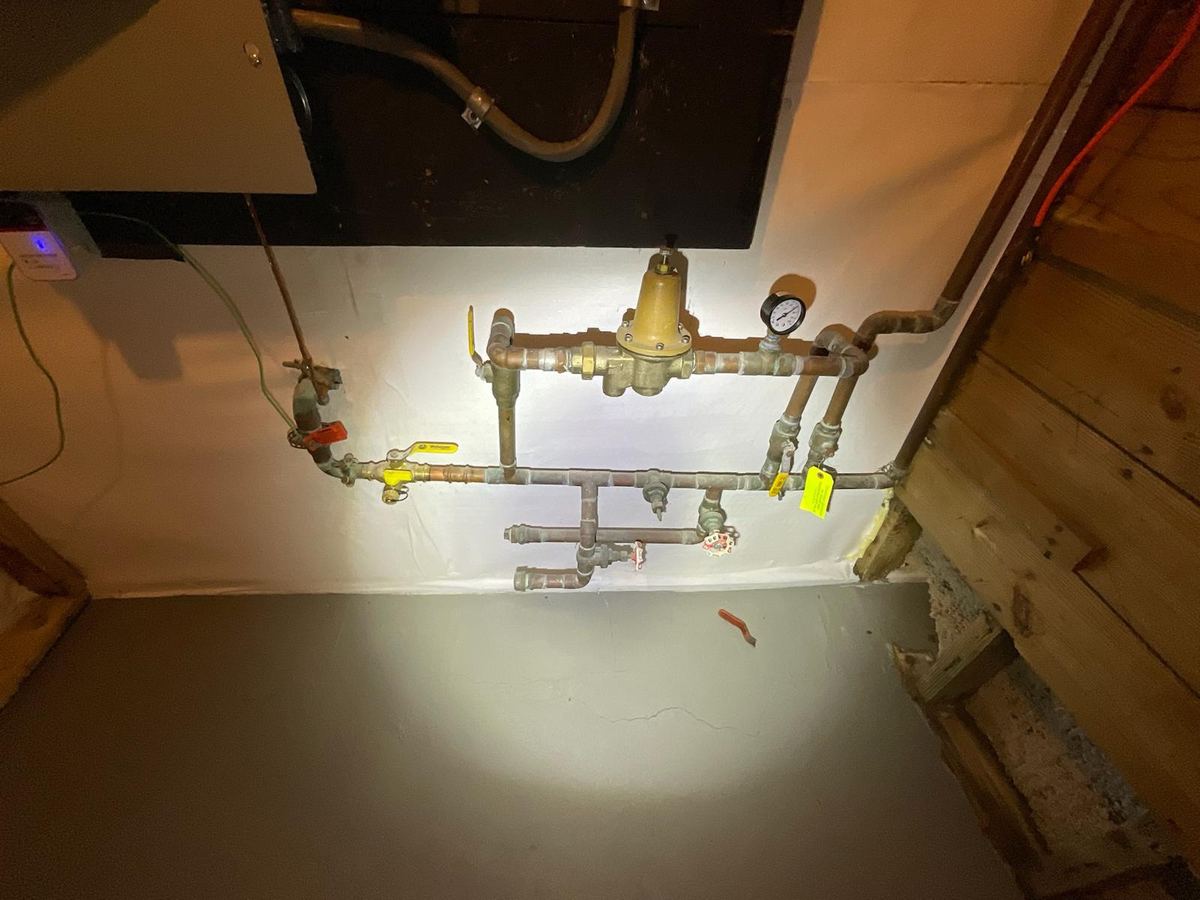
The main water shutoff. You need to know where it is in the dark, in a flooded basement, in a house you have lived in for two days. On older Shore homes it is often behind a panel in a finished basement or out in a crawlspace, not somewhere obvious.
The electrical panel and the main breaker. Same reason. I will also show you what I wrote up in there, because on this coast a panel is frequently the most expensive line in the report.
The crawlspace hatch or basement access. Look in it yourself once, with my light. You do not need to crawl. You need to have seen the space so the report photos mean something.
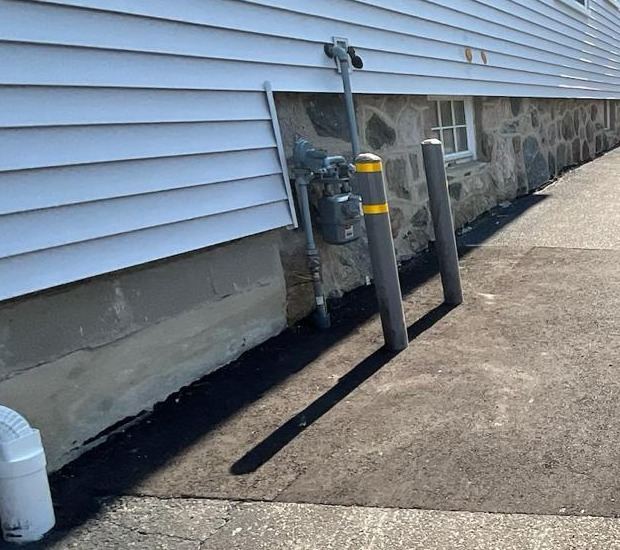
The gas shutoff, and the emergency switch on the boiler or furnace. The furnace switch looks like an ordinary light switch on the wall or a joist near the unit, and buyers routinely flip it by accident and then think the heat failed.
What I want you to look at, not just listen to
The single most useful thing that happens on a buyer walkthrough is putting your hand on something. Reading “elevated moisture at base of wall, north side” in a PDF is abstract. Standing there while a moisture meter climbs is not.
On the coastal houses around Brielle, Sea Girt, and Point Pleasant, the item I most often want a buyer to actually see is the exterior electrical equipment. Salt air works on service equipment here at a pace inland houses never deal with. What I am pointing at is not a general “it looks old” impression. It is the specific look of a disconnect or meter enclosure where the bottom edge has gone from painted steel to a brown, layered flake that lifts off in sheets under a screwdriver tip, and where the screw heads have swelled to the point that they will not take a driver anymore.
That last part matters. When the fasteners on an outdoor enclosure have corroded solid, the next electrician who has to open it is not doing a fifteen minute service call, and that changes what a repair is worth in a negotiation. A photo does not communicate it. Ten seconds of looking at it does.
The one question to ask before I pack up
Ask me which findings I would act on before closing and which I would put on a three year list. That is the question that turns a long report into a decision, and it is the whole reason to be there in person.
I will give you a straight answer. That is the entire premise of how I work: no scare tactics, no inflating a minor item to look thorough, and no minimizing a real one to keep a deal comfortable. Some houses come back with a short list. Some do not. Either way you get the same read.
What I will not do is tell you whether to buy. That is your call, and it depends on price, timeline, and how much work you actually want. My job is making sure you decide with the full picture.
Common questions
Can I be home during a home inspection if I am the seller? Yes, though most listing agents prefer sellers step out. If you stay, give the buyer room. A seller narrating the inspection makes buyers nervous even when everything said is true. A pre-listing inspection is the better option if you want to know what a buyer’s inspector will find.
Do home inspectors come inside every room? Yes. Every accessible room, closet, attic hatch, and crawlspace opening. Locked rooms and areas blocked by stored belongings get noted as not inspected, which is why clearing access to the panel, attic hatch, and water heater before the appointment is worth the ten minutes.
Does a home inspector check the plumbing? Visible plumbing, fixtures, drainage, water heater, and supply piping material, yes. What is behind a finished wall or underground is outside the scope of a visual inspection, which is where a moisture meter and thermal imaging earn their place.
Can I ask questions during the inspection? Ask them at the end. Questions during the systems run are how items get missed. Save them and I will spend real time on them once I know what I am looking at.
Booking one on the Jersey Shore
If you are under contract in Point Pleasant Boro, Manasquan, Brielle, Wall Township, or anywhere else in Monmouth County, plan on being there for the last hour and bring the questions.
You can see what a buyer’s home inspection covers, what radon and mold testing adds when the house calls for it, and how inspections in Point Pleasant work in this market. To get on the schedule, call 732-800-2318 and tell me your closing date.