
Central vacuum systems are one of the most underappreciated features a home can have. Most buyers walk right past the inlet without knowing what it is. Sellers rarely mention it. That’s a missed opportunity on both sides of the transaction.
After hundreds of home inspections across Fairfield and Westchester Counties, this is one upgrade I point out every single time — because once buyers understand what they’re looking at, they’re immediately interested.
What a Central Vacuum System Is
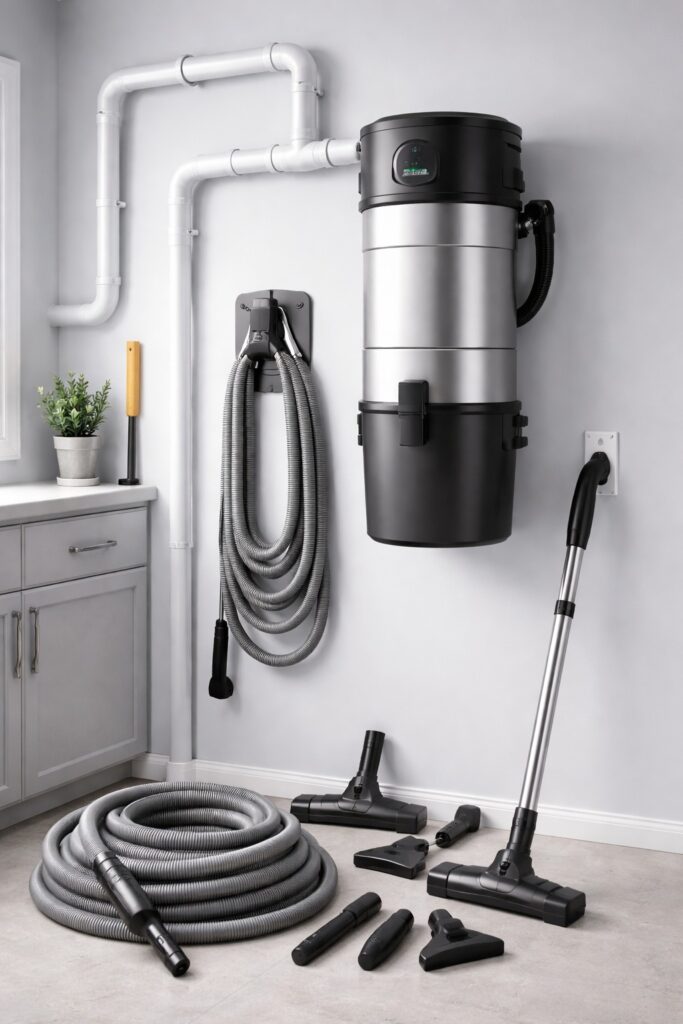
A central vacuum system is a permanently built-in cleaning system — closer in concept to plumbing or electrical wiring than a household appliance. A powerful motor unit sits in the garage, basement, or utility room. PVC pipes run through the walls to inlet valves placed throughout the home.
To use it, you plug a lightweight hose into the nearest inlet. Dirt and debris travel through the pipes to a central canister stored away from your living space. No heavy machine to carry. No cord to manage. No exhaust blowing back into the room.
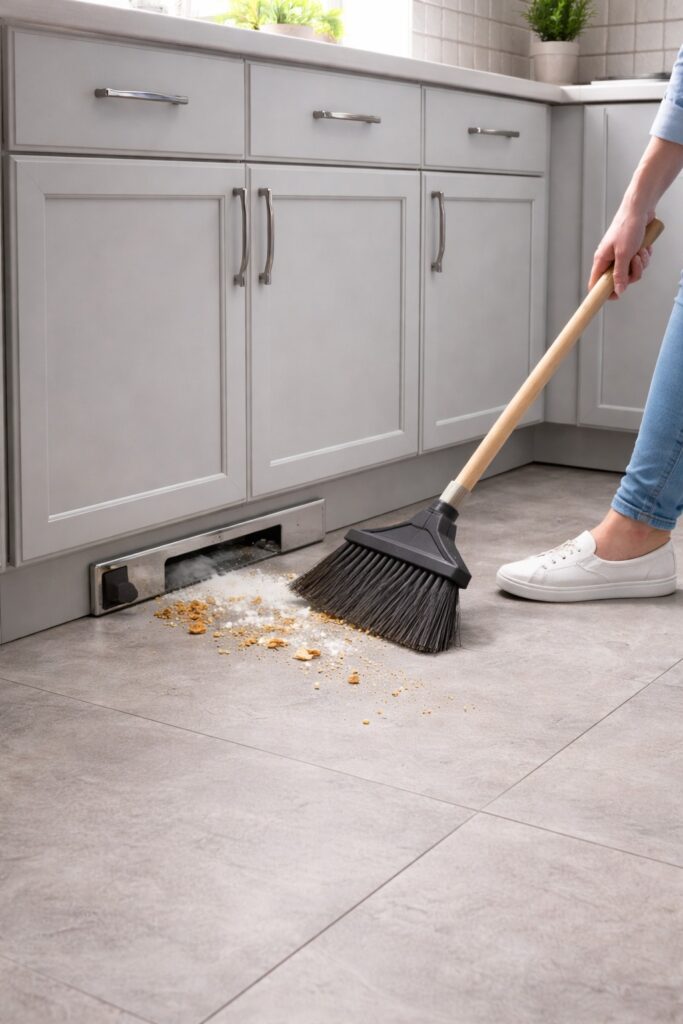
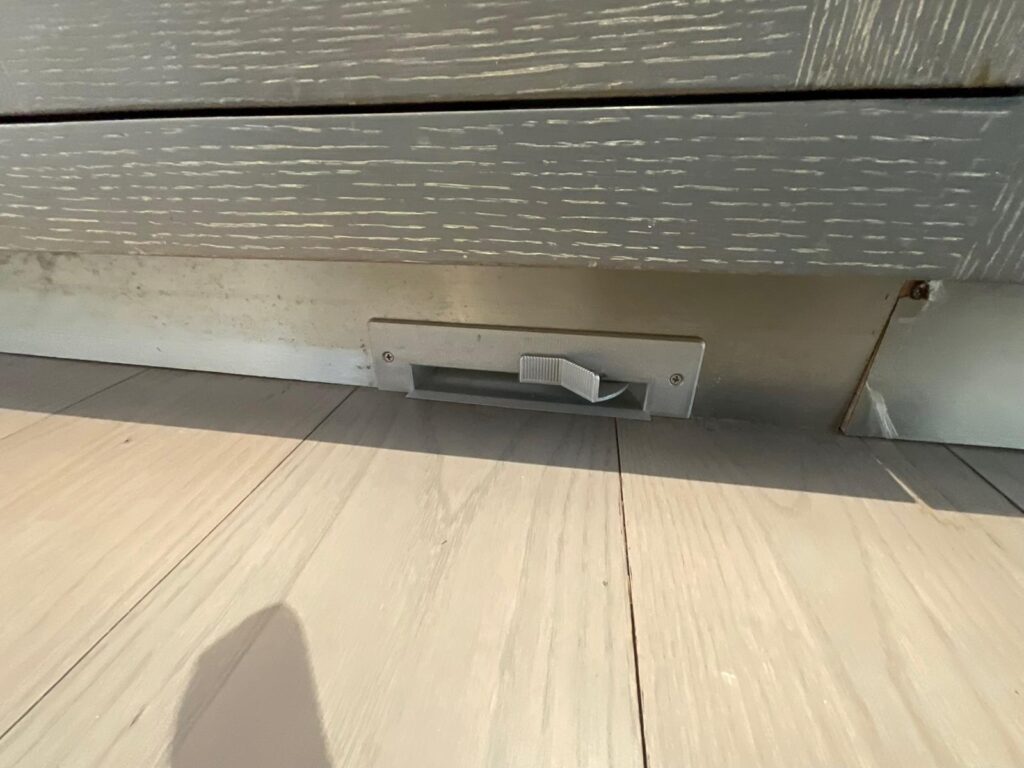
Many systems also include a toe-kick panel — a small floor-level inlet built into the base of the kitchen cabinets. Sweep crumbs toward it after cooking, tap the lever with your foot, and the mess disappears. No bending. No noise. No equipment to put away.
It’s one of those features that sounds minor until you’ve used one daily.
Why It Matters
The most significant benefit isn’t convenience — it’s air quality.
Traditional portable vacuums pull debris in and exhaust air back out into the room. That exhaust carries fine dust, pollen, pet dander, and allergens with it. A central vacuum system removes all of that from the living space entirely, sending it to a remote canister well away from where your family spends time.
The U.S. EPA specifically recommends central vacuum systems vented to the outdoors as one of the most effective ways to reduce biological allergens in the home. A University of California Davis clinical study found measurable health improvements across seven categories — including sleep quality, nasal symptoms, and eye symptoms — among people who switched to central vacuum systems.
For families with allergies, asthma, young children, or elderly members, that’s not a minor upgrade. It’s a real health decision backed by data.
There’s also the performance factor. Central vacuum motors can be up to three times more powerful than portable models. The motor doesn’t need to be compact, so it runs cooler and delivers consistent suction throughout the entire home. And because it stays in the garage or basement, the noise inside the house is barely noticeable.
What Professionals Often See
When I find a central vacuum system during an inspection, I evaluate it the same way I evaluate any built-in system. A few patterns come up regularly.
Poorly planned DIY installations
Inlets placed in inconvenient locations, pipes routed carelessly through wall cavities, or motor units tucked somewhere that makes canister access difficult. The system may work, but not well — and a buyer paying for this feature deserves to know what they’re actually getting.
Deferred maintenance
Filters that haven’t been changed, canisters that haven’t been emptied in years, and motors working harder than they should because of a partial blockage in the pipe network. These aren’t deal-breakers, but they’re worth documenting.
Systems that have simply been forgotten
This one surprises people. I’ve inspected homes where the sellers didn’t realize their central vacuum was still fully functional. Inlets covered by furniture, a motor in the garage untouched for a decade — but the system was intact and needed only basic maintenance to perform well.
Signs You Might Notice
If you’re living in a home with a central vacuum system and want a quick sense of whether it’s in good shape, here’s what to watch for:
- Weak or inconsistent suction at one or more inlets — often a blockage or small pipe leak
- Unusual noise from the motor unit — clicking, grinding, or a higher pitch than normal
- Dust around the canister area — the filter needs attention or the canister needs emptying
- Inlets that don’t click firmly when the hose is inserted — worn valve mechanisms
- A motor that runs but delivers no suction — a complete blockage or motor failure
Most of these are routine maintenance issues. A well-maintained system can last 20 to 30 years with nothing more than basic upkeep.
Why This Happens
Central vacuum systems don’t get the attention they deserve for a simple reason: the major vacuum manufacturers make more money selling portable vacuums every few years than promoting systems built to last decades. There’s no marketing behind this feature, so most buyers don’t know it exists until someone points it out.
In older homes across Fairfield County and Westchester County — colonials and Cape Cods built from the 1970s through the 1990s — these systems were installed at a rate that might surprise you. Many are still in place, still functional, and completely unknown to the current owners.
Renovations, furniture moves, and years of landscaping changes can cover inlets or disconnect sections of pipe without anyone realizing it. A thorough inspection finds what’s actually there.
Professional Insight
If you’re buying a home with a central vacuum system, make sure your inspector actually evaluates it — not just notes it exists. Ask specifically about motor condition, inlet function, suction consistency, and canister maintenance history.
If you’re selling and your home has this system, put it in the listing. Show buyers the toe-kick panel in the kitchen during showings. In markets like Greenwich, Darien, Scarsdale, and Larchmont, features that signal a well-maintained, thoughtfully upgraded home stand out — and this one is easy to demonstrate.
If you’re considering installing one, retrofitting is more straightforward than most people expect. Pipes are typically routed through attic spaces, basements, or crawlspaces with minimal wall disruption. Professional installation runs between $1,200 and $3,000 depending on home size and complexity — a reasonable investment for a system built to last as long as the house itself.
A pre-installation inspection is also worth considering. Knowing your home’s layout, wall access, and utility space options before committing to the work saves time and avoids surprises.
Final Thoughts
A central vacuum system does three things at once: it makes daily life easier, it improves the air your family breathes, and it adds real value to the property. The small door at the base of the kitchen cabinets is easy to walk past — but for buyers who know what it is, it’s exactly the kind of detail that signals a home has been cared for.
Whether you’ve spotted one in a home you’re buying, want to know if yours is working properly, or are thinking about adding one — Nearwater Property Group can give you the full picture.
📞 (203) 219-4034 | tom@nearwaterpgllc.com | nearwaterpgllc.com
Available Monday–Sunday, 7:00 am – 10:00 pm. Serving Norwalk, Stamford, Greenwich, Darien, New Canaan, Fairfield, Westport, Wilton, Rye, Mamaroneck, Harrison, Scarsdale, and Larchmont.
ASHI Certified · Licensed in CT, NY & NJ · Every inspection exceeds State and National Industry Standards