How to Spot Problems Before They Become Costly Repairs
Your roof is one of the most important parts of your home. It protects you from rain, snow, wind, and harsh sunlight every single day. But because it’s out of sight, it’s often out of mind—until something goes wrong.
A small roof issue can quickly turn into a major expense if left unchecked. Water damage, mold growth, structural problems, and even interior ceiling damage can all start with a minor roof leak. The good news? Regular roof inspections can help you catch problems early, save thousands of dollars in repairs, and extend the life of your roof. In this guide, we’ll walk you through how to spot common roof problems and when to call in a professional home inspector.
Why Regular Roof Inspections Matter

Most homeowners only think about their roof when they notice a leak or see missing shingles after a storm. But waiting for visible damage can be costly. Here’s why regular roof inspections are so important:
Prevent Water Damage and Leaks
Even a small crack or gap can let water seep into your home. Over time, this moisture can damage insulation, rot wooden beams, and ruin ceilings and walls.
Avoid Structural Issues
A compromised roof can lead to sagging, weakened support beams, and even damage to your home’s foundation if water runs down interior walls.
Stop Mold and Mildew Growth
Moisture from roof leaks creates the perfect environment for mold. This can affect your home’s air quality and pose health risks to your family.
Save Money in the Long Run
Catching a small issue early—like a few damaged shingles—is much cheaper than replacing an entire section of roof or repairing water-damaged interiors.
Extend Your Roof’s Lifespan
Regular maintenance and inspections help your roof last longer, protecting your investment for years to come.
Experts recommend inspecting your roof at least twice a year—once in spring and once in fall—and after any major storm.
Signs of Roof Problems You Can Spot from the Ground
You don’t need to climb onto your roof to spot potential issues. In fact, for safety reasons, we recommend staying on the ground and using binoculars if needed. Here are some warning signs to look for:
Missing, Cracked, or Curling Shingles
Shingles are your roof’s first line of defense. If you notice any shingles that are missing, cracked, curling at the edges, or lying flat when they should be textured, it’s time to take action. Damaged shingles expose the underlayment and can lead to leaks.
Sagging or Uneven Roof Areas
A sagging roofline is a serious red flag. It may indicate structural damage, water accumulation, or weakened support beams. Never ignore a sag—it requires immediate professional attention.
Moss, Algae, or Mold Growth
While moss might look charming, it can trap moisture against your roof and cause shingles to deteriorate faster. Dark streaks or green patches are signs of algae or mold, which can also damage roofing materials over time.
Damaged or Loose Flashing
Flashing is the metal material around chimneys, vents, and skylights that keeps water out. If you see rust, cracks, or sections that appear loose or bent, water can easily seep in at these vulnerable points.
Clogged or Damaged Gutters
Gutters full of shingle granules are a sign your roof is aging. Overflowing gutters can also cause water to back up under shingles or damage your home’s foundation.
Visible Wear Around Roof Penetrations
Check areas around chimneys, vents, and skylights. These spots are prone to leaks if seals or flashing have deteriorated.
What to Check Inside Your Home
Sometimes the first signs of roof trouble show up inside your house. Make it a habit to inspect your attic and ceilings regularly.
Look for Water Stains or Discoloration
Yellow, brown, or dark stains on your ceiling or walls are telltale signs of water intrusion. Even if the stain is small, it indicates a leak that needs immediate attention.
Check for Daylight Coming Through the Roof
Go into your attic during the day and turn off any lights. If you can see sunlight peeking through cracks or gaps, water can get in just as easily.
Inspect Insulation for Dampness
Wet or compressed insulation is a sign of moisture problems. Damp insulation loses its effectiveness and can lead to mold growth.
Feel for Excess Moisture or Musty Odors
A damp, musty smell in your attic or upper floors often means moisture is getting in somewhere. High humidity or visible condensation are also warning signs.
Watch for Mold or Mildew
Any sign of mold growth inside your home should be addressed immediately. Mold spreads quickly and can cause serious health issues.
Seasonal Roof Maintenance Tips
Taking care of your roof throughout the year can help you avoid major repairs. Here are some simple seasonal maintenance tasks:
Spring Maintenance
- Inspect for winter damage like missing shingles or ice dam issues
- Clean out gutters and downspouts
- Check flashing and seals around vents and chimneys
- Trim back any overhanging tree branches
Summer Maintenance
- Look for signs of heat damage, like warped or cracked shingles
- Check attic ventilation to prevent heat buildup
- Remove debris that may have accumulated
Fall Maintenance
- Clean gutters again to prepare for winter
- Inspect for loose or damaged shingles before harsh weather arrives
- Check for moss or algae growth and have it removed
After Major Storms
- Do a visual inspection from the ground
- Look for missing shingles, dents, or new leaks
- Document any damage with photos for insurance purposes
Important Safety Warnings for Homeowners
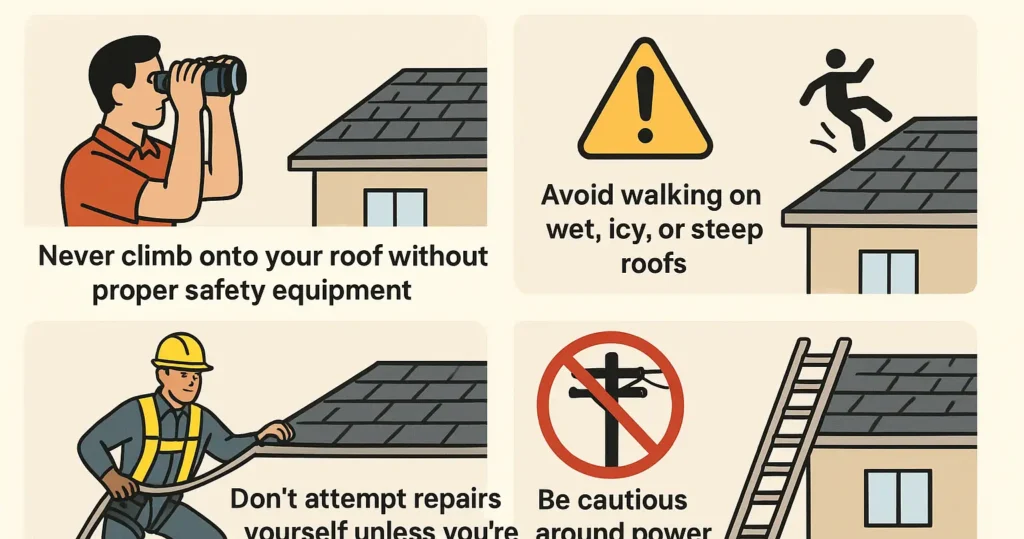
While it’s good to be proactive, roof inspections can be dangerous. Here are some critical safety tips:
- Never climb onto your roof without proper safety equipment. Falls from roofs cause serious injuries every year.
- Avoid walking on wet, icy, or steep roofs. Even experienced professionals take precautions in these conditions.
- Use binoculars to inspect from the ground. You can see a lot without ever stepping on a ladder.
- Don’t attempt repairs yourself unless you’re trained. Improper fixes can make problems worse and may void warranties.
- Be cautious around power lines. Always maintain a safe distance when using ladders or inspection tools.
When in doubt, always call a professional home inspector. It’s not worth risking your safety.
When to Call a Professional Home Inspector
Some roof issues are easy to spot, but many problems hide beneath the surface. A professional home inspector has the training, experience, and equipment to conduct a thorough roof evaluation safely.
You should call a professional if you notice:
- Any signs of sagging or structural damage
- Persistent leaks or water stains
- Extensive shingle damage
- Roof age of 15–20 years or more
- Damage after a major storm
- Signs of mold or significant moisture in your attic
How Nearwater Property Group Can Help
At Nearwater Property Group Home Inspections, we provide comprehensive roof evaluations as part of our detailed home inspection services. Our certified inspectors examine every aspect of your roof—from shingles and flashing to underlayment and ventilation systems.
We use advanced tools and techniques to identify current problems and potential future issues. You’ll receive a detailed report with photos, clear explanations, and recommended next steps. Whether you’re buying a new home, selling your current one, or simply want peace of mind, we’re here to help protect your investment.
Conclusion
Your roof works hard to protect your home and family every day. Regular inspections and seasonal maintenance can help you catch small problems before they turn into expensive disasters. By staying vigilant and knowing what warning signs to look for, you can extend your roof’s lifespan and avoid costly repairs.
Remember, while there’s a lot you can check yourself from the ground, some issues require a professional eye. Don’t wait until you see water dripping from your ceiling—schedule regular inspections and address problems early.
Ready to ensure your roof is in great shape? Contact Nearwater Property Group Home Inspections today to schedule a comprehensive home inspection. Our experienced team will give you the detailed information you need to make confident decisions about your home’s maintenance and safety.
SEO Meta Description:
Learn how to spot roof problems early with this beginner-friendly guide. Discover inspection tips, maintenance advice, and when to call Nearwater Property Group for a professional home inspection.