
Electrical Panel Safety 101: Why Double Tapped Neutrals Shouldn’t Be Ignored
Most people think double taps only happen on breakers. But double tapped neutrals—two neutral wires sharing one terminal screw—are a common electrical panel red flag that often flies under the radar. Neutrals carry current back to your panel, and most terminals are designed for just one wire unless labeled otherwise. When two wires crowd a single screw, it can cause loose connections, heat buildup, and tricky electrical problems. According to the National Association of Certified Home Inspectors, this issue is frequently overlooked but poses real safety concerns. Stick around to learn what this looks like, why it matters, and what to do next to keep your home safe.
Understanding Neutrals and Why They Matter
What Are Neutral Wires?
Neutral wires are the unsung heroes of your electrical system. They provide the return path for electrical current after it flows through your lights, appliances, and outlets. Think of your electrical circuit like a loop – power flows out through the hot wire, does its job, then returns through the neutral wire back to the panel and ultimately to the utility. These white wires are just as important as their black (hot) counterparts.
The Double Tapped Neutral Problem
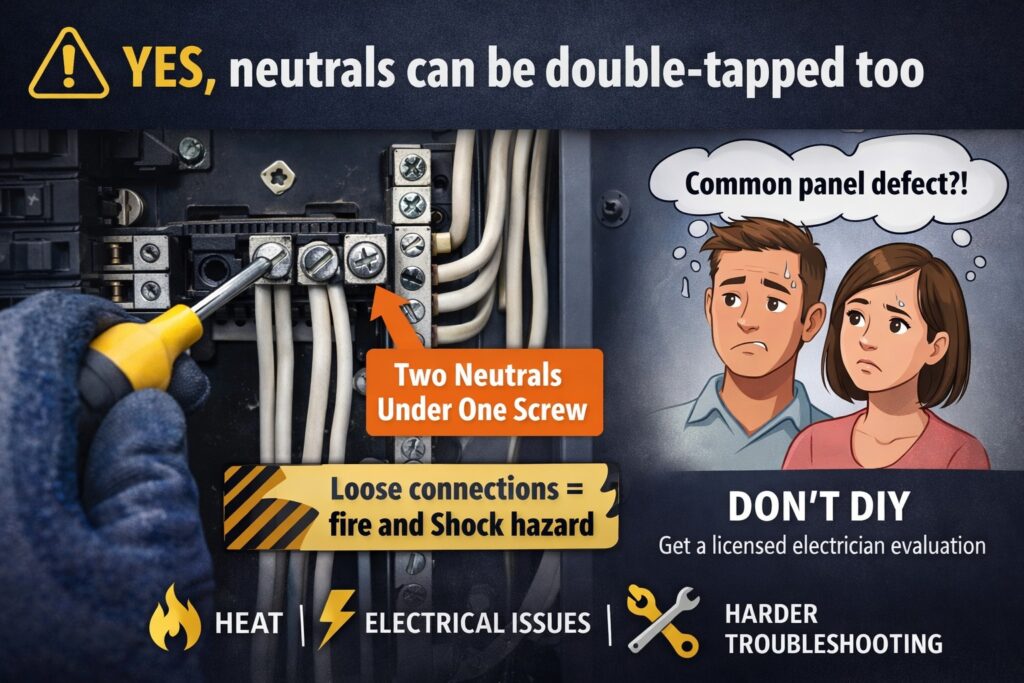
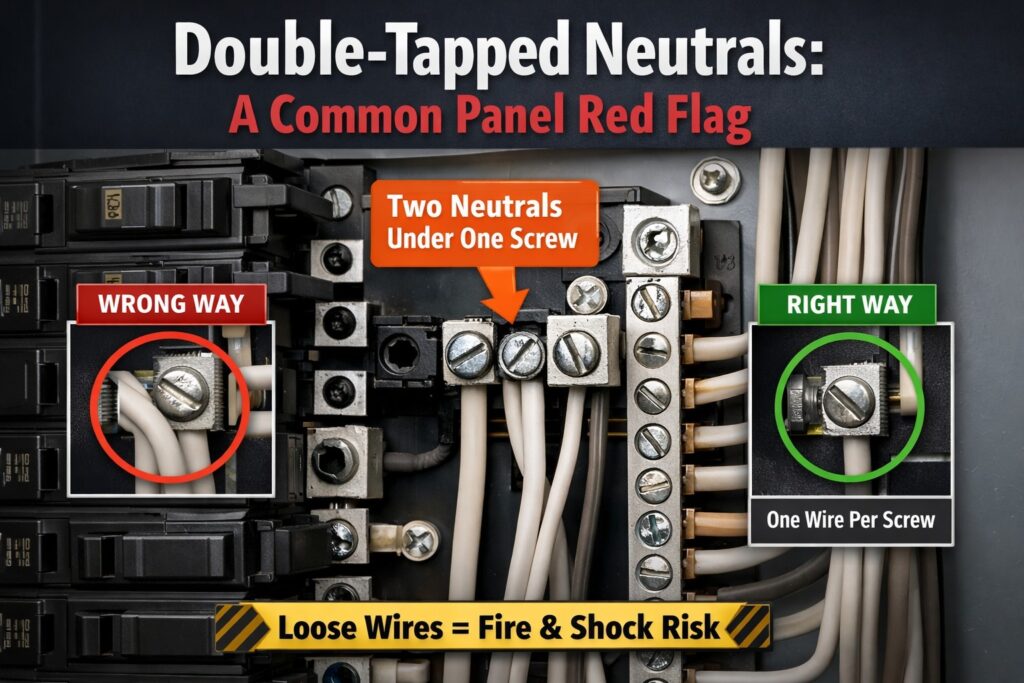
A double tapped neutral occurs when two or more neutral wires are connected under a single terminal screw on the neutral bus bar in your electrical panel. This might seem like a minor issue, but it’s actually against electrical code for good reason. Most terminal screws are designed and rated to secure only one wire unless they’re specifically labeled for multiple conductors.
When an electrician or DIYer stuffs two wires under one screw, neither wire can be properly secured. This creates a recipe for trouble, especially for first time home owners who may not recognize the danger.
Why Double Tapped Neutrals Matter
Safety Concerns
Loose connections in your electrical panel are never good news. With double tapped neutrals, several problems can develop:
-
Poor connections that create resistance
-
Resistance that generates heat
-
Heat that can damage wire insulation
-
Intermittent electrical issues throughout your home
-
Difficult troubleshooting since problems come and go
For electrical panel safety, proper neutral connections are non-negotiable. Unlike double tapped breakers (which are also problematic), double tapped neutrals often escape notice during casual inspections.
What It Looks Like in a Photo
In your electrical panel, look for the neutral bus bar – typically a metal bar with many screws where all the white wires connect. A properly connected neutral has one white wire securely fastened under each terminal screw. A double tapped neutral will have two white wires sharing a single screw. Sometimes the wires may appear to be securely held, but the terminal simply isn’t designed for this arrangement.
Sample Inspection Write-Up
“The electrical panel contains multiple instances of double tapped neutral wires on the neutral bus bar. This means two neutral wires are connected under a single terminal screw designed for only one wire. This condition can lead to loose connections, overheating, and intermittent electrical issues. Recommend evaluation and correction by a licensed electrician.”
What to Do Next
If your home inspection reveals double tapped neutrals, don’t panic – but don’t ignore it either. Here’s what you should do:
-
Hire a licensed electrician to evaluate the panel
-
Get a proper repair estimate
-
Have the issues corrected professionally
-
Never attempt to fix this yourself inside an energized panel
-
Consider a follow-up inspection after repairs
For first time home owners especially, electrical panel safety should be a top priority. The cost to fix double tapped neutrals is typically reasonable compared to the safety benefits.
Frequently Asked Questions
Are double tapped neutrals an immediate fire hazard?
While not always an immediate danger, double tapped neutrals create conditions where connections can loosen over time, potentially leading to overheating. The risk increases with higher current flow and as connections deteriorate.
Can I fix double tapped neutrals myself?
No. Working inside an electrical panel requires professional training and licensing. The panel remains energized even when the main breaker is off, creating serious shock hazards. Always hire a licensed electrician for this repair.
Will homeowners insurance cover problems caused by double tapped neutrals?
Many insurance policies exclude coverage for electrical issues resulting from improper wiring or code violations. If a problem occurs from a known but uncorrected wiring defect, you might find yourself without coverage for resulting damage.
Protecting Your Home and Family
Electrical panel safety issues like double tapped neutrals might seem technical, but they represent real risks to your home and family. When buying a home or evaluating your current one, proper inspection of these details matters.
Think your panel might have double tapped neutrals? Don’t guess. We’ll document it clearly, explain what it means in plain English, and tell you what to do next. Book your home inspection today.
According to Eaton’s technical documentation, proper wire terminations are critical for electrical safety and performance. The Electrical Contractor Magazine also highlights the importance of following code requirements for neutral wire connections.
By addressing double tapped neutrals promptly, you protect both your investment and the people who matter most.