Connecticut Home Buyers: Your Essential Pre-Purchase Inspection Checklist
Most home buyers skip the details that can turn a dream purchase into a costly headache. If you’re a Connecticut home buyer, spotting safety risks and hidden defects before closing isn’t optional—it’s essential. This pre-purchase home inspection checklist shows you what to watch for so you don’t face surprise repairs or deal delays after signing. Keep reading to learn what matters most before you commit. For more information about home inspection licensing in Connecticut, visit the official state portal.
Why Pre-Purchase Home Inspections Matter for Connecticut Buyers
When buying a home in Connecticut, a thorough inspection provides your last real opportunity to identify potential problems before taking ownership. A proper home inspection helps you:
-
Uncover safety hazards that could put your family at risk
-
Identify water intrusion and moisture issues that lead to costly repairs
-
Evaluate aging systems that might need immediate replacement
-
Gain negotiation leverage based on factual findings
The quality of home inspections can vary across Connecticut. Having your own checklist ensures you stay informed and protected throughout the process.
Selecting the Right Inspector
-
Inspector holds a valid Connecticut license (not just an intern permit)
-
Has provided sample inspection reports with clear photos and explanations
-
Carries proper insurance coverage
-
Can explain findings in plain language you understand
-
Has experience with homes similar to the one you’re purchasing
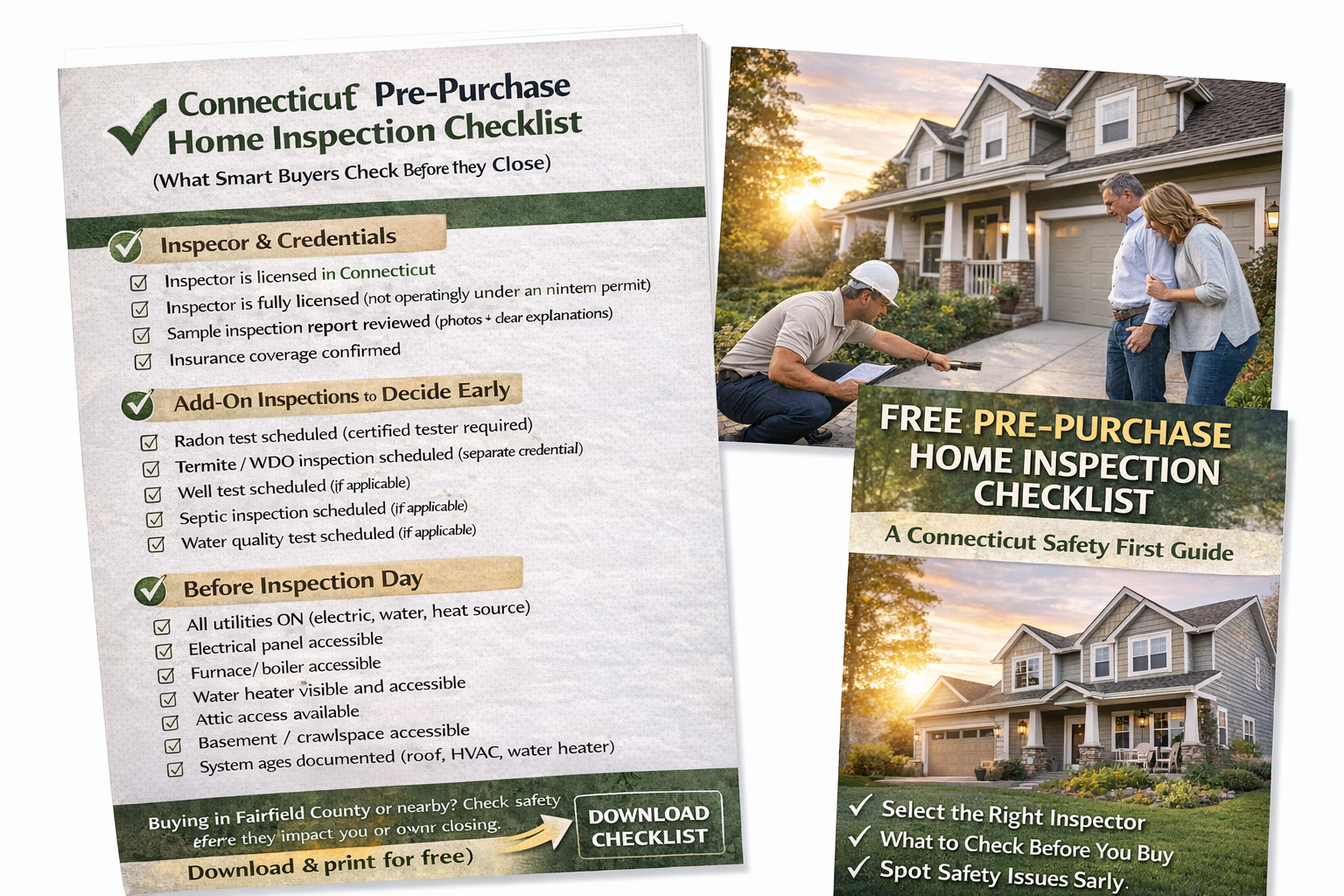
Your Essential Pre-Purchase Inspection Checklist
Before Booking Your Inspection
-
Schedule the inspection early in your contingency period
-
Research and select a licensed Connecticut home inspector
-
Ask about additional specialized inspections you might need:
-
Radon testing
-
Termite/WDO inspection
-
Well inspection (if applicable)
-
Septic system evaluation (if applicable)
-
Water quality testing (if applicable)
-
Preparing for Inspection Day
Ensure the inspection will be complete by confirming:
-
All utilities are turned ON (electricity, water, heat)
-
The seller has made these areas accessible:
-
Electrical panel
-
Furnace/boiler
-
Water heater
-
Attic access points
-
Basement and crawl spaces
-
Garage
-
-
Request documentation of system ages (roof, HVAC, water heater)
Remember: Areas that cannot be accessed cannot be properly evaluated.
Five Critical Areas Connecticut Home Buyers Should Focus On
1. Roof Condition and Drainage
-
Age and remaining life expectancy of roofing materials
-
Signs of leaks or water damage in attic spaces
-
Proper gutter installation and drainage away from foundation
-
Flashing integrity around chimneys and roof penetrations
2. Foundation and Structural Components
-
Distinction between cosmetic cracks and structural movement
-
Signs of settling or shifting
-
Evidence of water intrusion in basement or crawl spaces
-
Proper grading around the foundation
3. Electrical Safety
-
Panel condition and capacity
-
Proper grounding and bonding
-
Presence of outdated wiring (aluminum, knob and tube)
-
GFCI protection in wet areas (kitchens, bathrooms)
4. Plumbing Systems
-
Pipe materials and condition
-
Water pressure testing
-
Active leaks or signs of previous water damage
-
Drain function and venting
5. Heating and Cooling Systems
-
Age and condition of equipment
-
Proper installation and venting
-
Safety controls and operation
-
Expected remaining lifespan
How to Prioritize Inspection Findings
After receiving your inspection report, organize findings into these categories:
Safety Issues (Address Immediately)
-
Electrical hazards
-
Gas leaks or carbon monoxide risks
-
Missing safety components
-
Fire hazards
-
Structural concerns
Water Intrusion Problems
-
Basement moisture or flooding
-
Roof or flashing defects
-
Poor grading or drainage issues
-
Plumbing leaks
Major System Concerns
-
Roof replacement needs
-
HVAC systems near end-of-life
-
Foundation issues
-
Significant electrical or plumbing upgrades required
Using Your Inspection Report for Negotiation
For Connecticut home buyers, the inspection report serves as a valuable negotiation tool:
-
Request repairs for safety issues rather than credits
-
Prioritize water intrusion problems as they can lead to structural damage
-
Consider the age of major systems when making offers
-
Get contractor estimates for significant repairs to support negotiations
Final Tips for Connecticut Home Buyers

-
Attend your inspection in person whenever possible
-
Ask questions about maintenance requirements
-
Take photos during the inspection for your records
-
Consider a final walkthrough before closing to verify agreed-upon repairs
-
Keep your inspection report as a home maintenance guide
A thorough pre-purchase home inspection gives Connecticut home buyers the knowledge and confidence to make informed decisions. By following this checklist, you’ll be better prepared to evaluate potential homes and negotiate from a position of strength.
Connecticut-Specific Considerations
-
Older homes in New England often have unique historical features that require specialized knowledge
-
Connecticut’s climate means water management is crucial
-
Radon testing is important as many areas have elevated levels
-
Homes with wells and septic systems need additional evaluation
-
Local building codes and requirements vary by municipality
By approaching your home purchase with this pre-purchase home inspection checklist, you’ll minimize surprises and maximize protection for one of life’s biggest investments.