
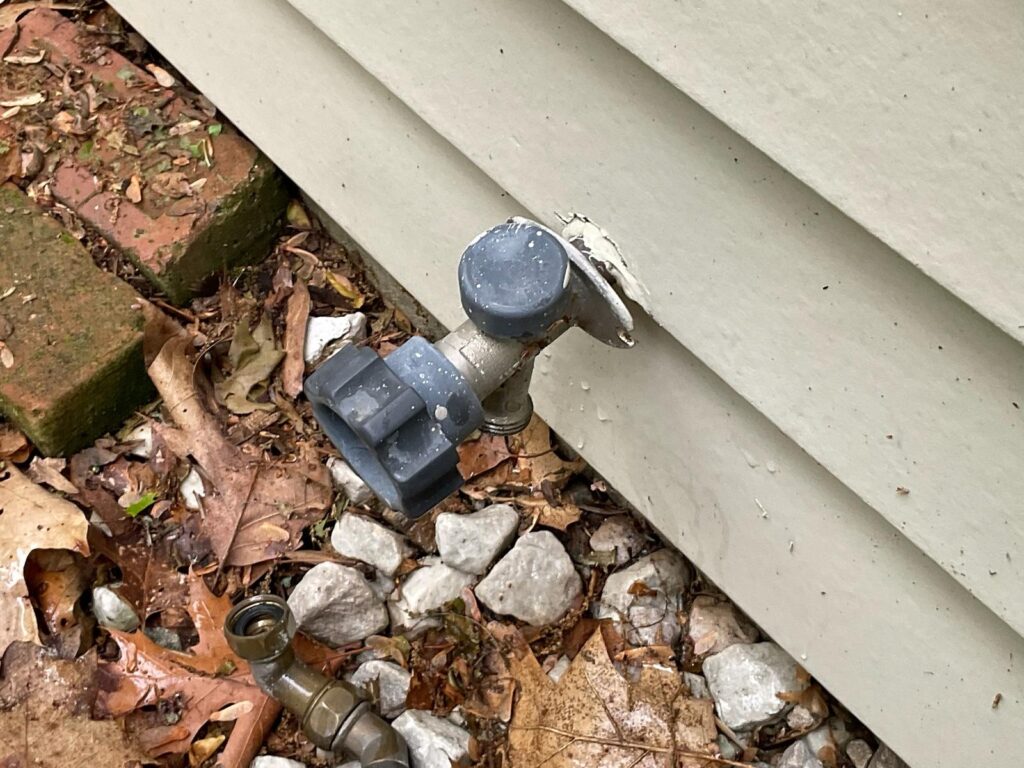
Exterior faucets are easy to overlook until you have a burst pipe, a flooded wall cavity, or a water quality concern. During inspections, one feature I’m always glad to see is a frost-proof hose bibb equipped with a vacuum breaker. It’s a small combination that helps protect both your home and your drinking water system.
In this post, we’ll break down what you’re looking at when you see this type of exterior faucet, why it matters, and what homeowners should know for maintenance and safety.
What Is a Hose Bibb?
A hose bibb (also called a sillcock, outdoor spigot, or exterior faucet) is the threaded faucet on the outside of the home where you attach a garden hose for watering, washing cars, filling buckets, etc.
Because it connects directly to your home’s potable (drinking) water supply, it needs to be installed in a way that protects:
- your plumbing system from freezing damage
- your water supply from contamination
- your home structure from hidden leaks
What Makes a Hose Bibb “Frost-Proof”?
A frost-proof hose bibb is designed to reduce the chance of freezing and bursting in cold weather. The key difference is where the water actually shuts off.
With a standard outdoor spigot, the shutoff valve is close to the outside wall, meaning water can remain in the pipe section exposed to freezing temperatures. If that water freezes, it expands and that expansion can split the pipe or damage the valve.
With a frost-proof model:
- the shutoff valve is located deeper inside the home (in a heated area)
- when you turn the handle off, water drains out of the exterior portion of the faucet
- the section near the outside wall is less likely to hold water that can freeze
This is a smart design, but it’s not magic it still needs to be used correctly to work as intended.
Important Homeowner Tip
A frost-proof hose bibb can still freeze if a hose or attachment is left connected during cold weather. A hose can trap water in the faucet body and prevent proper draining.
- Before freezing temps: disconnect hoses, splitters, timers, and spray nozzles
- Make sure it drains: after shutting it off, you shouldn’t have ongoing water flow
What Is a Vacuum Breaker (and Why Is It Important)?
The other feature mentioned here is the vacuum breaker. This is a backflow prevention device installed on the hose bibb. Its job is to protect your home’s water system from cross-contamination.
In simple terms: it helps prevent dirty water from being siphoned backward into your home’s potable water supply.
How Cross-Contamination Can Happen
Imagine a garden hose connected to the exterior faucet. The other end of that hose might be:
- sitting in a bucket with cleaning chemicals
- submerged in a pool, hot tub, or kiddie pool
- lying in a puddle, mud, or fertilizer-treated lawn
- attached to a pesticide sprayer
Under normal pressure, water flows out of the faucet and away from the home. But if there’s a sudden loss of pressure in the house supply (for example, a nearby water main break, hydrant use, plumbing work, or certain high-demand events), the system can experience back-siphonage.
Back-siphonage is when water is pulled backward potentially drawing contaminants from the hose into the home’s water piping. That’s the “cross-connection” concern the vacuum breaker helps prevent.
How the Vacuum Breaker Works (Homeowner Version)
A vacuum breaker is designed to allow air into the line if negative pressure occurs. By letting air in, it breaks the siphon effect so contaminated water is not pulled back into the system.
Many hose bibb vacuum breakers have a small cap or vent area and may drip briefly during certain conditions. That can be normal depending on the design, but constant leaking is not something to ignore.
Why It Matters Even If You Have “Good Water”
Homeowners sometimes assume water contamination is only a municipal issue. In reality, cross-contamination can happen at the home level especially at exterior faucets because they’re frequently connected to hoses that end up in less-than-clean environments.
A functioning vacuum breaker is a simple, low-cost safeguard that helps protect:
- your family’s health
- the home’s plumbing system
- the public water supply (in some situations)
Common Issues Homeowners Should Watch For
1) Missing Vacuum Breaker
Some older hose bibbs may not have one. In many areas, vacuum breakers are required by modern plumbing standards. If it’s missing, a plumber can often add an approved device or recommend the best upgrade.
2) Damaged or Leaking Vacuum Breaker
If you notice water spraying or leaking from the vacuum breaker area during normal use, it may be worn out, damaged, or not installed properly. Some components can be serviced; others are replaced as a unit.
3) Frost-Proof Faucet Still Freezing
The most common reason: a hose or accessory left attached in cold weather. Another cause can be improper installation pitch (it should typically slope slightly outward to drain).
4) Hidden Leaks Inside the Wall
Because a frost-proof faucet’s shutoff point is deeper inside, leaks may occur in the wall cavity if the unit is damaged by freezing or age. Signs can include staining, moisture, or swelling on interior finishes near the faucet location.
Seasonal Maintenance Tips for Homeowners
- Fall: disconnect hoses and drain them; consider shutting the interior valve if your plumbing has one
- Winter: avoid leaving hoses attached; check for drafts or freezing conditions around the supply line
- Spring: test the faucet and watch for leaks; confirm the vacuum breaker is intact
- Anytime: don’t submerge hose ends in chemicals or standing water without proper backflow protection
Takeaway
A frost-proof hose bibb helps reduce the risk of freeze-related plumbing damage, and a vacuum breaker helps protect your home’s water system from cross-contamination if there’s a loss of pressure. It’s one of those “small parts, big impact” features that can make a real difference in home safety and maintenance.
If you have questions about what you have installed or you’re not sure whether your exterior faucets are properly protected an inspection can help identify concerns before they become costly repairs.